
Strong knees rarely get the spotlight in fitness conversations—until something starts to hurt. Yet the ability to bend, step, run, and squat without discomfort depends heavily on one thing: knee stability. Whether you’re climbing stairs, jogging through your neighborhood, or lifting weights at the gym, stable knees allow your body to move safely and efficiently.
The good news is that improving knee stability doesn’t require complicated equipment or advanced training. A few well-chosen exercises can strengthen the muscles that support the joint and help protect it for years to come.
Here are three important insights—and exercises—that can help build stronger, more stable knees.
1. Knee Stability Depends on Teamwork Between Key Muscles
The knee joint relies on a coordinated effort between several muscle groups. While ligaments such as the ACL and MCL provide passive support, the real control comes from active muscles surrounding the joint.
The quadriceps straighten the knee, the hamstrings bend it, and the hip muscles help guide its alignment during movement. Think of the hips as the “steering wheel” that determines whether the knee tracks properly during exercises like squats, lunges, and step-ups.
When these muscles work together, they keep the knee properly aligned and reduce unnecessary strain on ligaments and cartilage. But when one group is weak or out of sync, the knee can collapse inward or wobble, increasing the risk of pain or injury. Strengthening all three areas—quads, hamstrings, and hips—is the foundation of knee stability.
2. Step-Ups and Lunges Train Real-World Knee Control
Many of the best knee stability exercises mimic everyday movement patterns. Step-ups and forward lunges are perfect examples because they train the body to control the knee as it bends and straightens under load.
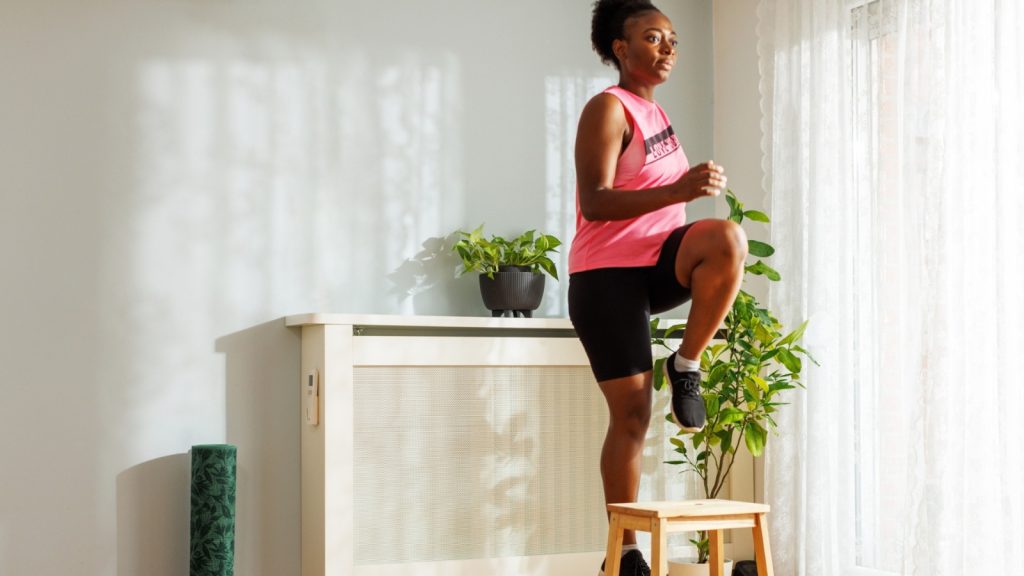
The step-up builds strength in the quads and glutes while teaching the knee to stay aligned as you push your body upward. It’s a movement similar to climbing stairs, making it highly functional for daily life.
Forward lunges add another challenge: deceleration. As you step forward, your muscles must slow your body down and stabilize the knee at the same time. This improves balance and coordination while strengthening the muscles around the joint.
Beginners can perform these exercises using just body weight. As strength improves, adding dumbbells or kettlebells increases the challenge and encourages continued muscle development.
3. Lateral Movements Build Complete Knee Stability
Most workouts focus on forward and backward movements, but the body also needs strength from side to side.
That’s where lateral lunges come in. This exercise trains the knee to stay stable as the body shifts sideways—a movement pattern often overlooked in traditional workouts.
Lateral lunges target the inner thighs, glutes, and hips while improving coordination and balance. Because the body’s center of mass moves sideways during the exercise, your muscles must work harder to control the knee’s position.
Practicing this type of movement can make everyday tasks—like stepping sideways, changing direction during sports, or catching yourself from a misstep—much safer.
The Bottom Line
Stable knees are essential for nearly every movement your body performs. By strengthening the quads, hamstrings, and hips with functional exercises like step-ups, forward lunges, and lateral lunges, you can improve joint control and reduce the risk of injury. A few minutes of focused training each week may not seem dramatic, but over time, it can make the difference between moving with confidence and struggling with knee pain.