
Achy knees don’t always mean damage. Weak glutes, tight hips, and poor movement patterns are often the real culprits, and they can be fixed with consistent work.
If you have got achy knees, do not be so quick to chalk it up to age, sports-related wear and tear, or arthritis. According to a licensed physical therapist, knee pain does not always mean there is structural damage. The cause might be a lack of flexibility, strength, or even poor movement patterns.
One key to dealing with knee pain is to strengthen the muscles that support the joint. When the muscles in your legs and glutes are strong enough to keep the knee stable, it will not shift excessively when you move.
Those muscles also need to be mobile enough to let your knees go through their full range of motion. When you are off-kilter in either area, extra stress lands on parts of the knee that are not designed to handle it.
The Hidden Danger of Prolonged Sitting
Sitting too much can also contribute to knee pain. Prolonged sitting, especially beyond 60 minutes at a time, can lead to stiffness in the hips and knees and reduced circulation. Over time, that can increase discomfort and limit how well your joints tolerate activity. Regular movement breaks and mobility work can help offset this.

When to Seek Professional Help
Any type of pain that results from an injury (like a fall or a blow), that lasts more than a few weeks, or that interferes with your daily activities should be checked out by a professional. Also seek treatment if your knee feels unstable, is giving out, locking up, or swelling significantly.
If you are just dealing with a minor ache, you can try the stretches and exercises below. If done consistently, they can significantly reduce symptoms and improve function. However, if your pain worsens or does not improve in a month, it is time to see a physical therapist.
A PT can look at the entire body to see how well it moves, specifically assessing the joints above and below the knee, like the hips and ankles, that may be lacking mobility or strength. Asymmetry between sides can increase stress on one knee over time.
A clinician can give you a targeted strength and mobility program that is just right for you.
3 Stretches for Knee Flexibility
People often think flexibility is fixed, but it is something you can improve with consistent work. Even small gains in mobility can reduce stress on the knee joint.
Tips: Do each stretch 3 to 5 times per week (or daily if tolerated). Hold each stretch 30 to 60 seconds and repeat 2 to 3 times. Do not bounce or push into pain. You should feel a stretch, not sharp discomfort.
1. Half-Kneeling Hip Flexor Stretch
Kneel on the floor (use padding if needed). Step your left foot forward so the knee is at 90 degrees. Gently tuck your pelvis (posterior tilt) and squeeze your glutes. Shift forward slightly until you feel a stretch in the front of your right hip. Hold 30 to 60 seconds, then switch sides.
2. Dynamic Hamstring Floor Stretch
Lie on your back with your legs extended. Bring one knee toward your chest and hold behind your thigh. Slowly straighten your knee, then bend it again in a controlled motion. Move through a comfortable range — no forcing end range. Repeat for 10 to 15 reps, then switch sides.
3. Figure 4 Stretch
Lie on your back with your knees bent. Cross one ankle over the opposite knee. Pull the supporting leg toward your chest. Hold 30 to 60 seconds, then switch sides.
4 Simple Exercises to Strengthen the Knees
These exercises focus on progressive strengthening, which is strongly supported by research for knee pain, including patellofemoral pain and early osteoarthritis.
Tips: Do these exercises 2 to 3 times per week. Work within a mild to moderate discomfort range (not sharp pain). Prioritize good form over heavy weight. Progress load gradually over time.
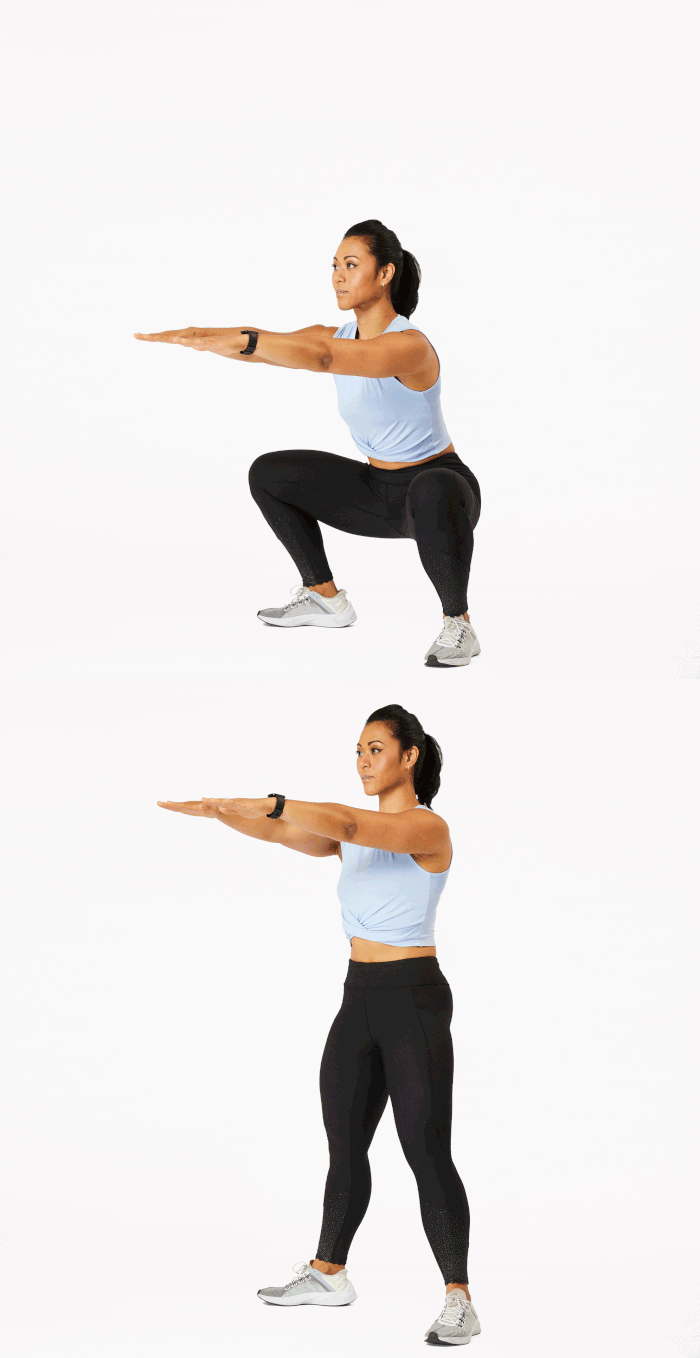
1. Squats
Stand with feet shoulder-width apart. Sit back and down, keeping your chest upright. Allow knees to move naturally over toes if comfortable. Push through your feet to stand. Do 3 sets of 8 to 15 reps. Research shows allowing natural knee movement (rather than restricting knees behind toes) is safe for most people and may improve function.
2. Deadlift (Hip Hinge)
Stand with feet hip-width apart. Hinge at the hips, keeping your back neutral. Lower until you feel tension in your hamstrings. Return to standing by driving through your hips. Do 3 sets of 8 to 12 reps.
3. Monster Walk (Side Steps)
Place a resistance band around ankles or knees. Slightly bend your knees and maintain tension on the band. Step side to side in a controlled manner. Keep knees aligned over feet. Do 2 to 3 sets of 10 to 15 steps in each direction.
4. Heel and Toe Raises
- Wall-Lean Heel Raises: Stand facing a wall. Rise onto your toes slowly. Lower with control. Do 2 to 3 sets of 12 to 20 reps.
- Wall-Lean Toe Raises: Stand with your back against a wall. Lift your toes while keeping heels down. Lower slowly. Do 2 to 3 sets of 12 to 20 reps.
Prevention: See a PT Before Symptoms Start
Saad emphasizes prevention as much as treatment. If you have a goal — like starting a running program or returning to sport — it may be worth seeing a PT beforehand, especially if you have had prior knee issues.
“A physical therapist can help you build strength, improve movement quality, and reduce injury risk before symptoms even start,” says Saad. “That proactive approach can make a big difference in long-term joint health.”