
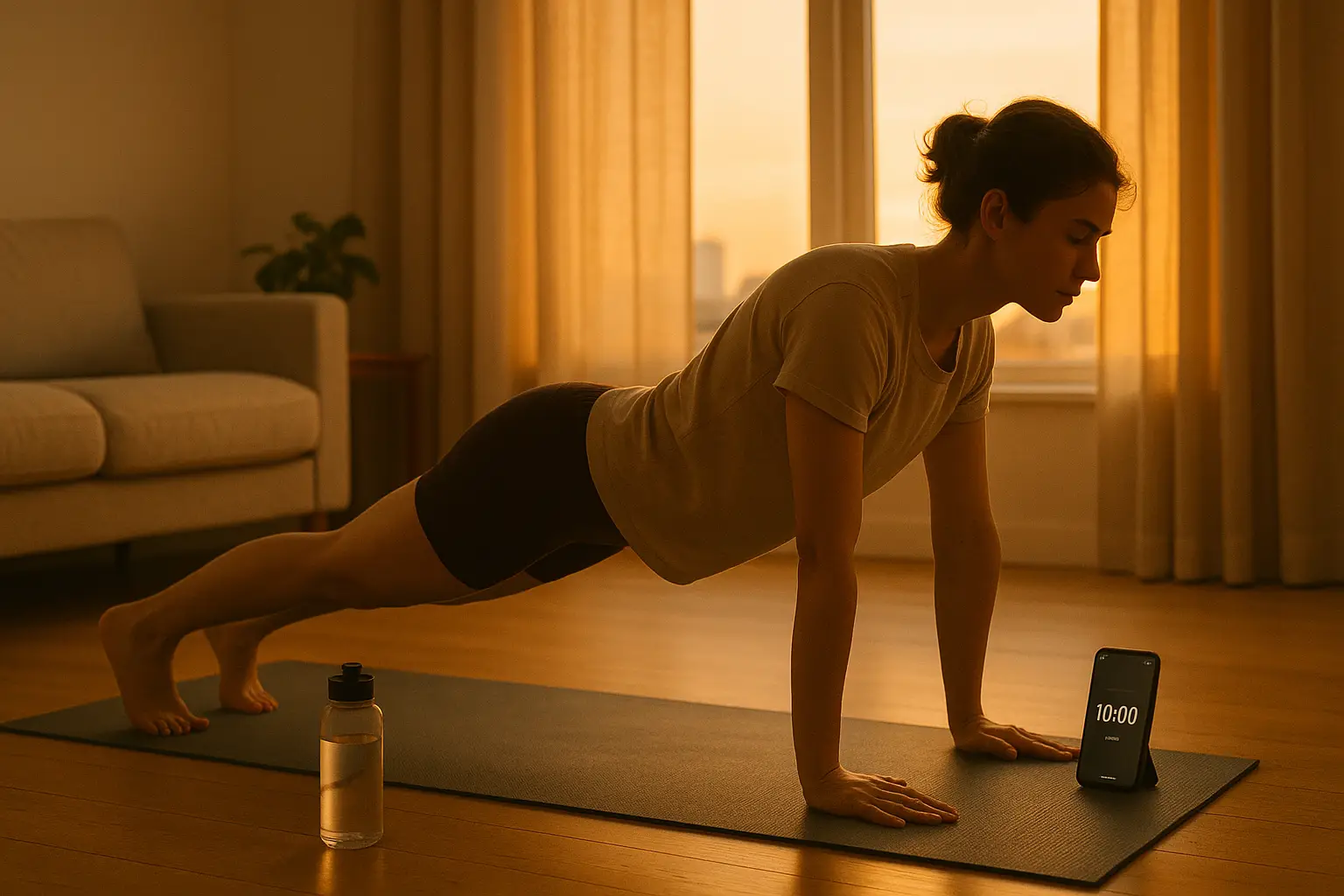
The pandemic pushed millions of us into virtual workouts, and even as gyms have reopened, many have stuck with the convenience and affordability of exercising at home. But without a trainer watching your every rep, you may be setting yourself up for injury.
While working out from home offers flexibility, it also removes the safety net of real-time form correction. The result? Workout mistakes that not only reduce the effectiveness of your exercise but can also lead to strains, joint pain, and sidelining injuries.
Below are four of the most common errors people make, whether at home or in the gym, and how to fix them immediately.
1. You’re Not Engaging Your Core
If you feel planks or pushups in your lower back rather than your stomach, you’ve fallen into a classic trap. Failing to activate your midsection forces other muscles to compensate.
The fix for proper core engagement: Pull your navel toward your spine as if bracing for a light punch. During standing exercises, keep a straight line from your neck to your tailbone. When lying down (e.g., for crunches), maintain contact between your lower back and the floor. If your back arches, you are no longer working your abs—you are straining your spine.

2. You’re Using Your Quads Instead of Your Glutes and Hamstrings
This is one of the most common quad dominance errors, especially during squats and lunges. Relying too heavily on your front thigh muscles puts extra pressure on your knees and robs your glutes of the growth they deserve.
The fix for proper glute activation: Press down through your heels as you rise from a squat or lunge. At the top of each repetition, squeeze your glutes and tilt your pelvis slightly forward—without arching your back. If your knees slide forward past your toes or you feel pain in the front of your legs, you know you’re using your quads instead of your glutes.
3. You’re Rounding Your Shoulders Forward
Adding dumbbells or resistance bands is fantastic for strength, but rounded shoulders during rows, presses, or bicep curls can lead to back injury and reduced range of motion. This mistake is often invisible to the person exercising.
The fix for proper shoulder alignment: Stand in front of a mirror. Keep your shoulders back, chest up and out, and imagine squeezing your shoulder blades together. Align your ears over your shoulders and your shoulders over your hips. If you cannot maintain that posture with your current weight, reduce the load. Lighter weights with perfect form are infinitely safer than heavy weights with a rounded spine.
4. You’re Overdoing It on High-Impact Exercise
High-impact exercise like burpees, box jumps, and sprinting can torch calories, but doing them daily without recovery is a direct path to overuse injury. This is especially dangerous for anyone with existing ankle or knee joint pain.
The fix for injury prevention: Schedule at least one rest day between high-impact sessions. Alternate HIIT workouts with low-impact options like yoga, swimming, or strength training. Most importantly, never push through joint pain. “Workouts don’t need to be high impact to be high intensity,” experts note. Protect your knees and ankles by choosing movements that raise your heart rate without jarring your skeleton.
The Bottom Line
You don’t need a personal trainer in your living room to stay safe. By fixing these four workout mistakes—improving core engagement, activating your glutes, maintaining shoulder alignment, and managing high-impact exercise volume—you can continue enjoying the freedom of home workouts without ending up on the injured list.
Remember: A mirror is your best coach. Check your form, listen to your body, and prioritize injury prevention over extra reps.