

If you’re choosing between the treadmill and the weight room, you may be shortchanging your heart health. According to leading cardiologists, the most effective strategy for protecting your cardiovascular system is combining both aerobic exercise and strength training rather than focusing on just one.
Dr. Nieca Goldberg, a cardiologist and clinical associate professor at NYU Grossman School of Medicine, strongly recommends a balanced approach.
“Cardio is more important in terms of blood pressure and cholesterol,” she explains. “Strength training also helps decrease your body fat and build muscle. So a combination program is better than one alone.”
Proven Benefits of Each Type of Exercise

Aerobic (Cardio) Exercise remains the foundation for heart health. Research shows that getting at least 150 minutes of moderate-intensity aerobic activity per week significantly:
- Lowers total cholesterol, LDL (“bad”) cholesterol, and triglycerides
- Raises HDL (“good”) cholesterol
- Reduces blood pressure in people with hypertension
- Strengthens the heart muscle, improving its pumping efficiency
Resistance (Strength) Training provides powerful complementary benefits. According to a scientific statement from the American Heart Association, regular strength training:
- Reduces body fat and increases lean muscle mass
- Improves traditional heart disease risk factors, including blood pressure
- Significantly lowers overall risk of cardiovascular disease
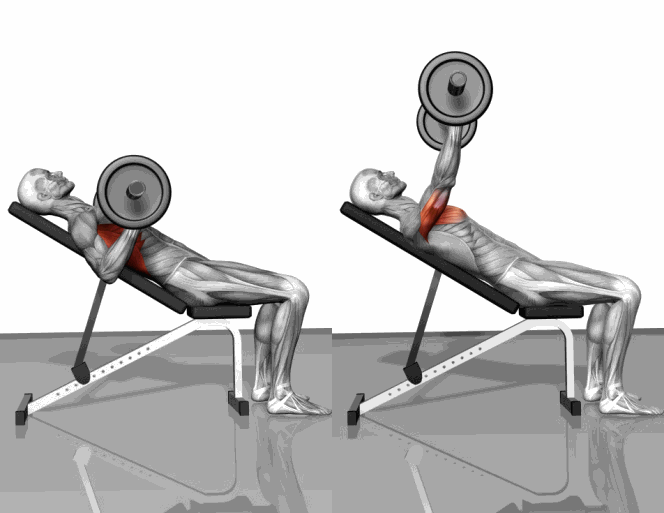
A randomized controlled trial found that combining both types of exercise for as little as eight weeks delivered greater cardiovascular improvements in people at higher risk for heart disease than either type alone.
The Best Approach for Long-Term Heart Health
While strength training is an excellent addition, experts emphasize it should not completely replace cardio if maximum heart benefits are the goal. The Centers for Disease Control and Prevention (CDC) recommends:
- 150 minutes of moderate-intensity cardio (brisk walking, cycling, swimming) or 75 minutes of vigorous-intensity activity (running, HIIT) per week
- Two or more days of muscle-strengthening activities (weights, resistance bands, or bodyweight exercises like push-ups and squats)
A mix of both modalities is also linked to greater longevity and overall health improvements.
“Start somewhere,” Dr. Goldberg advises. “You don’t have to do everything perfectly right away, but incorporating both will give you the best results for your heart and overall fitness.”
Whether you’re a gym regular or just getting started, adding variety to your weekly routine — alternating between cardio sessions and strength days — appears to be the smartest strategy for protecting your heart.