

Gaining muscle is one of the most common fitness goals, yet many people struggle to see consistent progress. The good news? Muscle growth (hypertrophy) is achievable for nearly everyone with the right combination of progressive resistance training, adequate nutrition, and patience.
According to fitness science, building muscle occurs when your body deposits more protein into muscle tissue than it breaks down — a process driven primarily by heavy resistance training and sufficient protein intake. While hormones like testosterone and growth hormone play roles, the two most controllable factors remain consistent strength training and proper fueling.
The Science of Muscle Growth

Skeletal muscle fibers contract to produce force. When you train with moderate to heavy loads, you create microscopic damage to these fibers. During recovery — fueled by protein and calories — your body repairs and thickens the fibers, leading to increased size and strength.
Key principle: Progressive overload. You must continually challenge your muscles with heavier weights, more reps, or better form over time to force adaptation. If you can easily complete more than 20 reps on an exercise, the weight is likely too light for optimal growth.
Training Essentials for Muscle Gain
Repetition Ranges
- 1–5 reps: Primarily builds strength
- 8–12 reps: Optimal for hypertrophy (muscle size)
- 15+ reps: Builds muscular endurance
Recent research shows individual responses vary — some grow best with lower reps/heavier loads, others with higher reps/moderate loads. Experiment within the 6–20 rep range.
Choose the Right Weight
Pick a load that leaves you at or near failure by the target rep count. You should have no more than “two reps left in the tank” at the end of most sets.
Exercise Selection
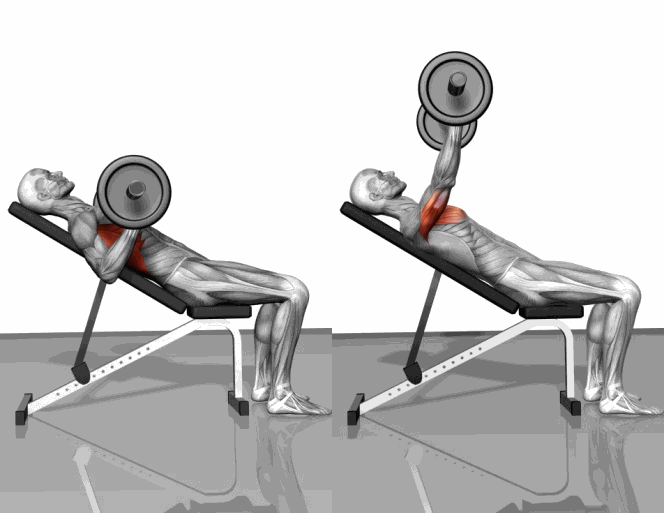
- Prioritize compound movements (squats, deadlifts, bench press, rows, overhead press, pull-ups) — they recruit multiple large muscle groups and allow heavier loading.
- Add isolation exercises (bicep curls, leg extensions, lateral raises) to target lagging areas.
A balanced split might include 3–5 compound lifts followed by 1–2 isolation movements per session.
Workout Structure
- Perform 3–5 sets per exercise
- Train each major muscle group 2–3 times per week
- Rest 1–3 minutes between heavy sets, 60–90 seconds for lighter isolation work
- Limit total exercises per session to 5–7 to avoid overtraining
Nutrition for Muscle Growth
- Calorie Surplus: Eat 300–500 calories above maintenance daily for sustainable gains without excessive fat. Use an online TDEE calculator to estimate your baseline needs.
- Protein: Aim for 1.4–2.2 grams per kg of body weight daily (e.g., 112–176 g for an 80 kg person). Spread intake across 4–6 meals.
- Carbs & Fats: Fill remaining calories with carbs for energy and glycogen, and healthy fats for hormone support.
- Best Sources: Lean meats, fish, eggs, dairy, legumes, nuts, and protein powders.
Realistic Expectations
Beginners can gain 0.5–2 pounds (0.25–0.9 kg) of muscle per month with optimal training and nutrition. Over several years, this can translate to 20–40 pounds (9–18 kg) of lean mass — a dramatic transformation.
Track progress with measurements, photos, strength gains, and how clothes fit — not just the scale, since muscle weighs more than fat.
The Bottom Line
Building muscle requires consistency, progressive overload in the gym, and a slight calorie surplus with high protein intake. Results take months to years, but the process is straightforward and effective for almost anyone willing to commit.
Stay patient, train hard, eat smart, and recover well — your physique will follow.