
Imagine trying to become a master chef by only using a microwave; you might be able to heat things up, but you’ll never develop the skill to create a truly memorable meal. Similarly, building a genuinely strong and functional body solely with exercise machines is like that culinary limitation—you might see some surface-level results, but you’ll miss out on the depth, complexity, and raw power that only comes from mastering the “Big 5” lifts.
These foundational movements—the squat, deadlift, bench press, overhead press, and barbell row—aren’t just exercises; they are the cornerstones of physical development. Machines, with their fixed paths and isolated movements, can’t replicate their magic. Here’s why.
The Squat: Building Core Stability and Real-World Leg Strength
The barbell squat is far more than a leg exercise; it’s a full-body upheaval. While a leg press machine isolates your quads in a fixed, seated position, a squat forces your entire body to work as a single, cohesive unit. Your core must brace intensely to protect your spine, your back muscles fire to keep you upright, and your stabilizer muscles in the hips and ankles work overtime to maintain balance. This builds a type of strength that translates directly to everyday life, whether you’re lifting a heavy box or simply getting out of a low chair.
The Deadlift: The Ultimate Test of Posterior Chain Power
If there is one movement that embodies total-body strength, it’s the deadlift. This lift engages more muscles than almost any other, hammering the hamstrings, glutes, back, traps, and forearms simultaneously. A machine like a hamstring curl can only target one small part of this kinetic chain. The deadlift teaches your body how to generate force from the ground up, building a powerful posterior chain—the engine room of your physique—and fortifying your grip strength, which is a direct marker of longevity and vitality.
The Bench Press: Coordination and Lockout Strength
The bench press is the classic measure of upper-body pushing power, but it’s not just about the pecs. Unlike a chest press machine that stabilizes the weight for you, a barbell requires your shoulders, triceps, and even your lats to work in perfect harmony to control the path of the bar. This coordination, known as intra-muscular coordination, builds practical pressing strength and robust shoulder health that a guided machine simply cannot provide.
The Overhead Press: The Forgotten Sculptor of Shoulders
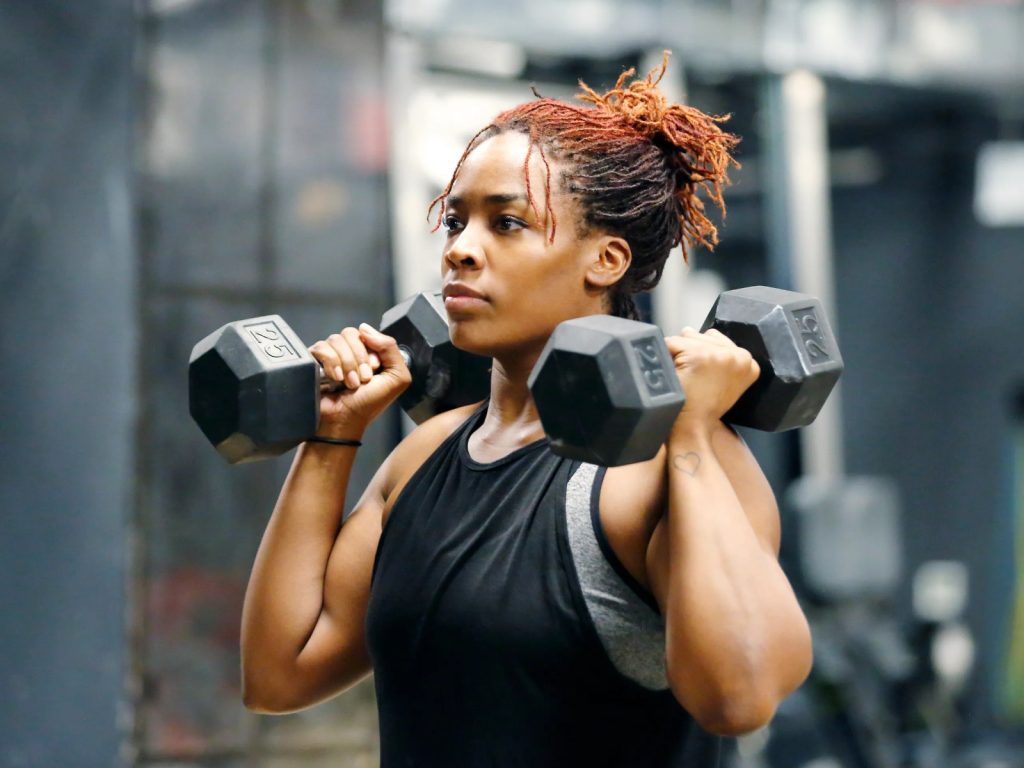
The overhead press is the king of shoulder-building, but its benefits go far beyond deltoids. Pressing a barbell from your chest to overhead in a standing position is a phenomenal test of core stability and full-body tension. Machines that mimic this movement often have you seated with back support, removing the core from the equation entirely. The standing press forces your entire body to create a stable platform, building impressive, resilient shoulders that can handle the demands of life above your head.
The Barbell Row: Building the Foundation of Posture
In a world dominated by sitting and slouching, the barbell row is a crucial corrective. While a seated cable row is a great accessory, the bent-over barbell row forces your lower back, glutes, and hamstrings to isometrically hold your body in a stable position while your upper back muscles pull the weight. This builds a thick, powerful back that improves posture, pulls your shoulders back, and creates the structural foundation for all other lifts.
In conclusion, while machines have their place for isolation work, rehabilitation, or adding volume, they can never replace the comprehensive, functional stimulus of the Big 5 lifts. These compound movements don’t just build muscle; they build a coordinated, resilient, and powerful body that is prepared for the physical demands of the real world. To truly build a strong body, you must step away from the guided path of the machine and embrace the challenging, rewarding journey of free weights.