
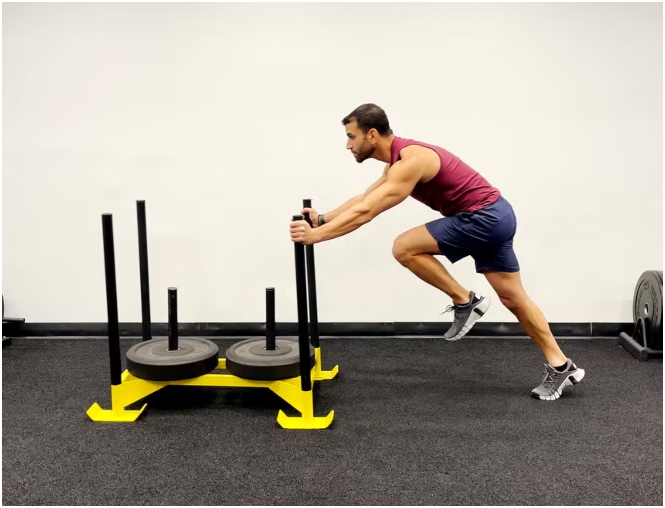
If you’ve spotted someone pushing a weighted sled across the gym floor and wondered what all the effort is for, you’re not alone. The exercise—popularized in recent social media posts by longtime TODAY Show anchor Al Roker—has gained attention as a simple yet incredibly effective full-body workout.
Fitness professionals say sled pushes deliver serious benefits for strength, cardiovascular health, joint function, and workout variety.
What Exactly Are Sled Pushes?
Sled pushes involve driving a weighted metal sled (loaded with plates) forward across a smooth surface, usually turf or a gym floor. The movement requires constant force, engaging nearly every major muscle group. Certified exercise physiologist Emily Hernandez, MS, EP-C, with Orlando Health, explains that the sled creates dynamic resistance without the impact of running or jumping. No sled at your gym? Alternatives include pushing a heavy sandbag or weighted backpack across grass for a similar effect.

Key Benefits Backed by Experts
Sled pushes stand out as a low-impact, high-reward resistance exercise:
- Full-Body Muscle Activation — The push heavily recruits the quads, hamstrings, glutes, and calves while the core, back, and shoulders work hard to stabilize and drive the movement.
- Lower-Body Strength & Joint Health — Building leg strength improves stability, balance, and coordination—especially valuable as we age. Emerging research links lower-body resistance training to reduced pain and better function in people with knee and hip osteoarthritis.
- Cardiovascular Endurance — Adding weight and distance elevates heart rate significantly, turning the exercise into a hybrid strength-cardio session. Regular dynamic work like this supports better circulation and may lower long-term risk of heart disease, stroke, and hypertension.
- Workout Variety & Motivation — Swapping repetitive exercises (squats, leg presses, running) for sled pushes keeps routines fresh. One study found participants in varied high-intensity programs reported higher satisfaction and adherence than those repeating the same workout weekly.
- Functional Carryover — The horizontal pushing pattern mimics real-life actions (pushing furniture, sprint starts in sports), making gains more transferable to daily activities.
Potential Downsides & Safety Tips
Personal trainer Sean McGuinness, CP, notes that sled pushes generally carry low injury risk when performed correctly. Still, poor form can strain the lower back or shoulders. Key safety pointers include:
- Keep spine neutral, chest up, and core braced throughout.
- Avoid rounding shoulders or lower back.
- Start light and progress gradually—never sacrifice form for heavier loads.
- Consult a doctor first if you have heart conditions, high blood pressure, or prior injuries to the spine, calves, or Achilles tendon.
Sleds can also be hard to find or expensive (some home models exceed $200), so check your gym’s turf area or ask about alternatives.
How to Program Sled Pushes
Tailor sets, reps, distance, and load to your goals:
- Strength & Muscle Building — Heavy load, short distance (10–15 yards), 4–6 sets, 1–3 minutes rest.
- Speed & Agility — Lighter load, longer/faster pushes (15–25 yards), 5–10 sets, 30 seconds–2 minutes rest.
- Beginners — Start light, focus on steady pace and perfect form, then build intensity over weeks.
Whether you’re chasing fat loss, stronger legs, better heart health, or simply a change from the usual gym routine, sled pushes offer a powerful, joint-friendly way to level up. As Al Roker’s recent post reminds us: sometimes the simplest equipment delivers the biggest results.