
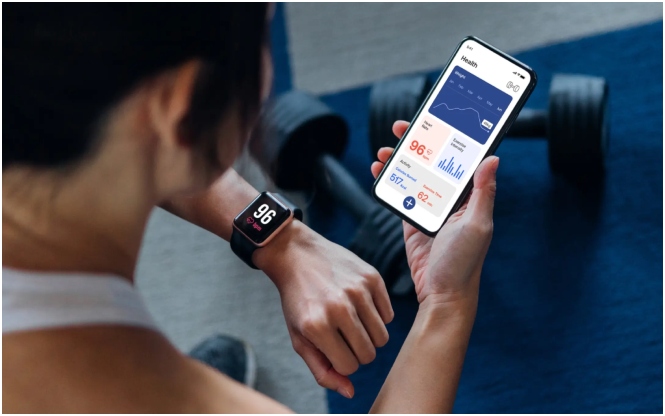
Fitness trackers and calorie-counting applications, worn by millions seeking to improve their health, may come with a significant psychological downside, according to new research.
A study led by experts from University College London (UCL) and Loughborough University has found that these popular devices can induce feelings of “shame,” “irritation,” and disappointment, particularly when users fail to meet algorithm-generated targets. In some cases, these negative emotional responses led to complete demotivation, with users giving up on their health goals altogether.
The research, published in the British Journal of Health Psychology, employed artificial intelligence (AI) to analyse tens of thousands of public posts on X (formerly Twitter).
The team identified 58,881 posts discussing the five most profitable fitness applications, then filtered these to isolate those expressing “negative sentiment.” A total of 13,799 posts — nearly one in four — revealed users struggling with the emotional fallout of their tracking devices.
‘Blame and Shame’ from Rigid Algorithms
The study uncovered several recurring themes. Users reported feeling shame when logging unhealthy foods, irritation in response to app notifications, and disappointment when they were unable to meet their daily or weekly goals. The researchers highlighted a particularly alarming example: one user wrote,
“If I want to reach my goal weight I need to consume −700 (negative 700) calories a day,” an impossible and potentially dangerous target generated by rigid algorithms.
“These apps rely on algorithms that do not reflect the flexibility and messiness of real life, or account for individual circumstances and differences,” the researchers wrote. Dr Paulina Bondaronek, from the UCL Institute of Health Informatics and senior author of the paper, added, “In these posts, we found a lot of blame and shame, with people feeling they were not doing as well as they should be. These emotional effects may end up harming people’s motivation and their health.”
A Call for Holistic Design
The study’s authors are not calling for an end to fitness tracking technology, but rather a fundamental redesign. They argue that developers should move away from “very narrow, rigid measures of success relating to amount of weight lost” and instead prioritise overall wellbeing and intrinsic motivation — the inherent enjoyment or satisfaction found in physical activity.
“Instead of very narrow, rigid measures of success… health apps should prioritise overall wellbeing and focus on intrinsic motivation,” Dr Bondaronek said. She also offered a personal reflection: “We need to learn to be kinder to ourselves. We are good at blaming and shaming because we think it will help us to do better but actually it has the opposite effect.”
Limitations and Further Questions
The researchers acknowledged an important limitation: the study only analysed negative posts, so it cannot assess the overall effect of fitness apps on wellbeing.
“The apps may have a negative side, but they likely also provide benefits to many people,” Dr Bondaronek noted.
Co-author Dr Lucy Porter, from the UCL Division of Psychology and Language Sciences, emphasised the urgency of further investigation.
“Listening to users’ reports on social media has shown that fitness apps can sometimes leave users feeling demoralised and ready to give up — which is the exact opposite of what these tools are supposed to do,” she said. “We know from previous research that feeling ashamed and miserable about yourself is not going to support healthy, long-term behaviour change. What we need to know now is how pervasive these effects on morale and emotional wellbeing are, and whether there is anything that can be done to adapt fitness apps so that they better meet people’s needs.”
For the millions who rely on fitness trackers, the study serves as a reminder that technology designed to motivate can, if poorly calibrated, have the opposite effect — turning the pursuit of health into a source of emotional distress.