
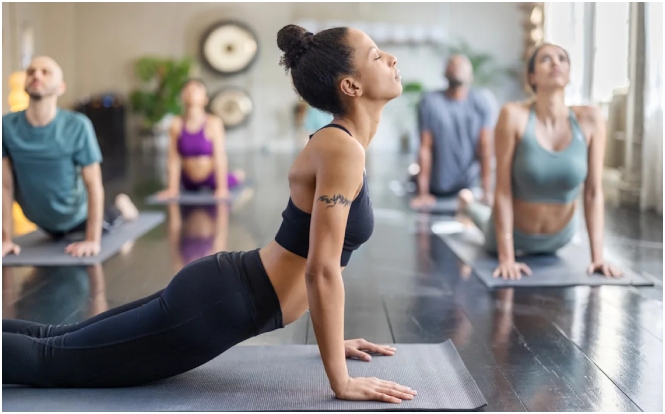
In the modern fitness landscape, the debate between yoga and Pilates continues to gain considerable traction. While both are frequently categorized as mind-body exercises, recent data suggests Pilates has surged ahead in popularity.
According to Classpass, Pilates was the most popular fitness class style of 2025 for the third consecutive year, with bookings up 66% year-over-year, while yoga took the second spot with a 28% increase.
Despite this surge, fitness experts and instructors assert that these two modalities are fundamentally distinct, yet highly complementary.
Here is a breakdown of what each practice offers and how to choose the one best suited for individual fitness goals.
Distinct Origins and Core Focuses
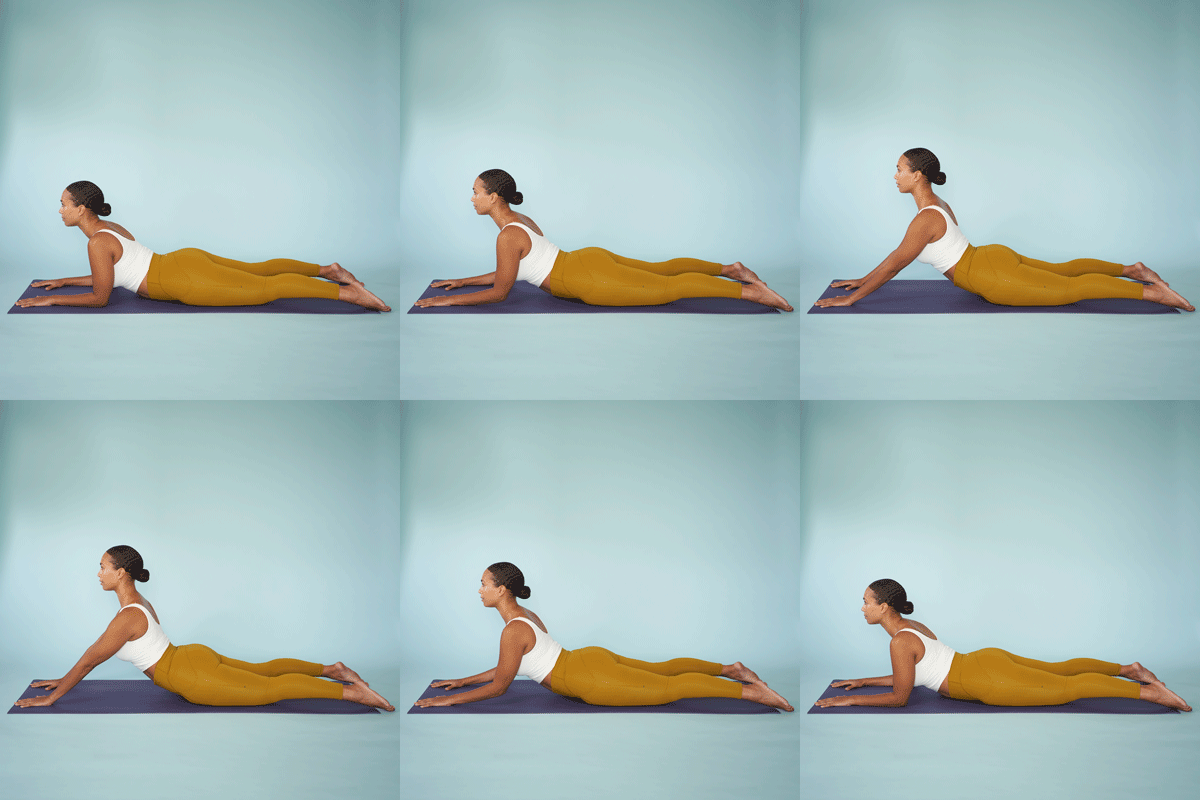
Yoga is often perceived primarily as a series of physical postures on a mat. However, its roots extend far deeper into a holistic discipline that unites mind, body, and spirit through physical postures (asanas), breathwork (pranayama), and meditation.
“Yoga is a lifestyle practice, not just a physical one,” explains Keri Bergeron, MSPT, ERYT-500. “We use the physical practice, breath work and meditation as tools to help us inhabit our bodies, slow the pace of our minds and tend to our nervous systems.”
In contrast, Pilates—developed by German-born Joseph Pilates in the early 20th century—is a low-impact, mind-body exercise focused primarily on core strength and stability, breath, functional movement, and neuromuscular control. While mat-based classes are available, Pilates is often performed on specialized spring-loaded equipment like the reformer, chair, or ladder barrel. “What Pilates does exceptionally well is improve neuromuscular control, movement precision, coordination and muscular balance,” explains Pablo Vera Saura, master instructor trainer with Merrithew Stott Pilates.
The Benefits: Stress Relief vs. Core Stability
Research highlights distinct physical and mental benefits for both practices. Timothy Burgin, RYT 500, notes that the strongest evidence for yoga lies in stress reduction, improved mood, and reduced pain. “Yoga helps lower cortisol, the body’s primary stress hormone, and shifts the nervous system from fight-or-flight toward rest and renewal,” Burgin explains.
Alternatively, Pilates offers exceptional physical conditioning.
“The primary benefits of Pilates are improved core strength, stability, posture and alignment,” says Camille Boyd, NASM-CPT. She adds,
“A consistent practice can help people feel stronger, more connected to their bodies, and more resilient overall.” While both practices boast improved balance and enhanced mental health, the mechanism differs drastically: yoga harnesses the body to quiet the mind, while Pilates employs the mind to strengthen and stabilize the body.
Tackling Flexibility, Mobility, and Back Pain
Another key distinction lies in how they address joint stiffness. Because yoga poses are often held for extended periods, they build passive flexibility—the ability to stretch muscles and soft tissues around a joint. Pilates, on the other hand, rarely holds a stretch; movement remains dynamic, resulting instead in enhanced joint mobility driven by balanced forces between push and pull.
For individuals suffering from back pain, the choice requires careful consideration. Yoga’s focus on lengthening tight muscles can be effective for some, but it may exacerbate other issues. Pilates, with its targeted approach to deep core stabilizers and misalignment, may be a potentially better fit for those with hypermobility.
Choosing the Right Workout and the Power of Complementarity
According to experts, the “better” workout ultimately depends on the participant’s specific goals. If an individual is craving stress reduction, mindfulness, and a spiritual approach, yoga is likely the better fit. If one desires functional movement, core strength, injury prevention, and joint stability, Pilates may resonate more. Both practices are considered beginner-friendly, provided the classes are taught by instructors capable of offering modifications for various body types and ability levels.
Fitness professionals emphasize that there is no need to choose just one. Practicing both can be incredibly complementary, allowing individuals to reap the benefits of each. However, for a truly well-rounded fitness program, experts remind consumers that neither yoga nor Pilates fully replaces heavy weight training for muscle mass and bone density, nor traditional cardiovascular exercise for heart health.
As Boyd concludes, “Both practices have tremendous value, and the ‘best’ option is the one someone will enjoy and stick with consistently.”