Muscle Building & Strength Training

How to Break Through a Strength Plateau in 30 Days
Muscle Building & Strength Training

How to Break Through a Strength Plateau in 30 Days

You’re training hard but your numbers won’t budge — welcome to the strength plateau. Everyone hits it eventually. But with the right 30-day strategy, you can break through and start gaining again. 1. Change Rep Ranges Your muscles adapt fast. If you’ve been lifting 5 reps for weeks, switch to 10–12 reps for a while. The variation stimulates new growth and resets your nervous system. 2. Add Accessory Work Identify weak points. Stuck on bench press? Strengthen your triceps and shoulders with dips, close-grip presses, and overhead extensions. Weak squats? Focus on hamstring curls and glute bridges. 3. Prioritize Recovery Most lifters underestimate the role of rest. Sleep at least 7–8 hours, eat enough protein, and take rest days seriously. Overtraining leads to stagnation. 4. U...

10-Minute Full-Body Strength Workout for Busy People
Muscle Building & Strength Training

10-Minute Full-Body Strength Workout for Busy People

No gym? No problem. You don’t need an hour-long session to build strength and stay fit. With smart planning, a 10-minute full-body strength workout can deliver surprising results — especially for busy professionals or parents on the go. Why It Works: This routine focuses on compound, time-efficient exercises that engage multiple muscle groups. The result: maximum strength stimulus in minimal time. Warm-Up (1 Minute) Start with 30 seconds of jumping jacks, then 30 seconds of dynamic stretches (arm circles, lunges, torso twists). Main Workout (8 Minutes) Perform each exercise for 45 seconds, resting for 15 seconds in between. Repeat the circuit twice. 1. Push-Ups – Strengthens chest, shoulders, and triceps. 2. Bodyweight Squats – Engages glutes, hamstrings, and quads. 3. Plank Rows – Buil...
Dumbbells vs. Barbells: Which Builds More Muscle?
Muscle Building & Strength Training

Dumbbells vs. Barbells: Which Builds More Muscle?

Few debates in fitness are as common as this one: dumbbells or barbells — which one builds more muscle? The truth is, both are powerful tools for muscle growth, but they serve different purposes depending on your training goals. **Barbells: Maximum Strength and Load**  Barbells allow you to lift heavier weights, making them ideal for compound movements like squats, bench presses, and deadlifts. Because both arms move together, you can handle more resistance, which is crucial for stimulating muscle hypertrophy through progressive overload. Barbells also make tracking your progress easy — you can add small increments over time. However, barbells can sometimes hide muscular imbalances. Since both sides share the load, your dominant side may compensate for the weaker one without you re...
The Secret to Progressive Overload That Nobody Talks About
Muscle Building & Strength Training

The Secret to Progressive Overload That Nobody Talks About

Progressive overload is the foundation of strength training and muscle growth — the principle that your body must face increasing challenges to keep adapting. But here’s the truth: most people think it’s just about adding more weight. The real secret? You can overload your muscles in **multiple ways**, not just by piling on plates. 1. Increase Time Under TensionSlow your reps down. Extending the eccentric phase (the lowering portion) increases muscle damage and stimulates greater growth. Try a 3-second lower and 1-second lift tempo to make lighter weights feel heavier. 2. Perfect Your Form  Sometimes, your strength plateau isn’t due to lack of effort but poor form. Refining your technique ensures muscles are activated efficiently. A cleaner rep is often better than a heavier one. 3. Manipu...
5 Compound Lifts That Transform Your Body Fast
Muscle Building & Strength Training

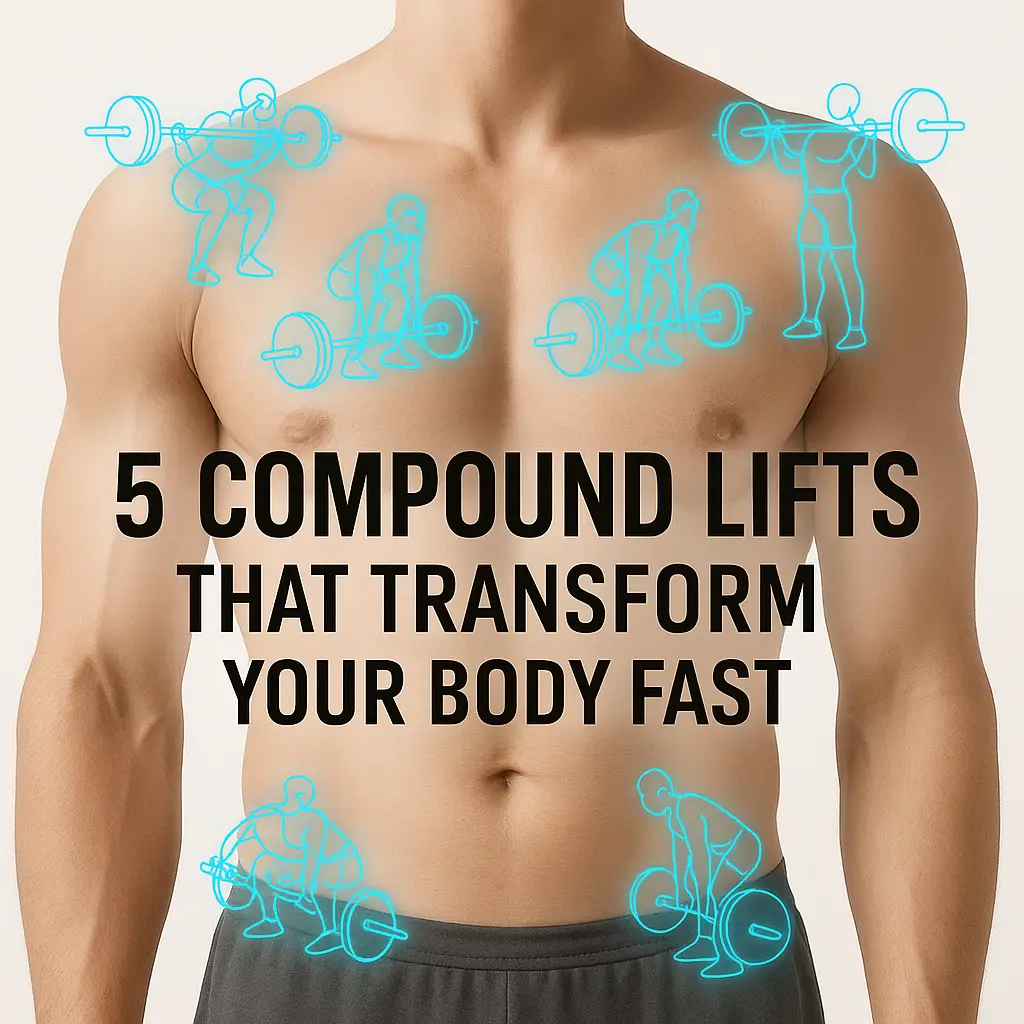
5 Compound Lifts That Transform Your Body Fast

If you’re chasing fast, visible results — more strength, muscle, and definition — compound lifts are your golden ticket. These are exercises that work multiple muscle groups at once, allowing you to move heavier loads, build strength efficiently, and burn more calories in less time. Unlike isolation movements (like bicep curls or leg extensions), compound lifts trigger a powerful hormonal response, increasing testosterone and growth hormone naturally. That’s why athletes, bodybuilders, and powerlifters all rely on them. 1. The SquatKnown as the “king of all lifts,” the squat strengthens your legs, glutes, and core simultaneously. Proper form is essential: chest up, back neutral, and hips below parallel. Adding variations like front squats or goblet squats challenges your stability an...
The Science Behind Warm-Ups: Do They Really Matter?
Muscle Building & Strength Training

The Science Behind Warm-Ups: Do They Really Matter?

The temptation to skip your warm-up and jump straight into your workout is real. Time is short, and you want to get to the "real" work. However, science makes it unequivocally clear: a proper warm-up is not a optional prelude; it is a critical component of the workout itself. It directly impacts your performance, safety, and long-term results. Let's break down the physiology of why. What is a Warm-Up's Primary Goal? The goal is to prepare your body for the physical stresses to come by creating specific physiological changes: 1.  Increased Core Temperature: A light aerobic activity (jogging, jumping jacks) increases blood flow. Warm muscles are more pliable and elastic, like a warm rubber band, reducing the risk of strains and tears. 2.  Enhanced Blood Oxygenation: As your heart...
How to Create a Workout Plan That Actually Works
Muscle Building & Strength Training, Weight Loss & Fat Burning

How to Create a Workout Plan That Actually Works

A well-intentioned but poorly designed workout plan is a primary reason for fitness failure. People often jump in without a map, leading to confusion, lack of progress, and eventual quitting. A plan that "actually works" is one that is tailored to you—your goals, your schedule, and your preferences—and is built on the principles of specificity and progression. Let's build your blueprint for success. Step 1: Define Your "Why" with a SMART Goal. Vague goals like "get fit" or "lose weight" are hard to track. Instead, create a SMART goal: Specific: "I want to lose 10 pounds of fat." Measurable: "I want to be able to run a 5K without stopping." Achievable: Is your goal realistic for your current fitness level and timeline? Relevant: Why is this important to *you*? Time-Bound: "I will achie...
7 Shocking Fitness Myths That Are Holding You Back
Muscle Building & Strength Training

7 Shocking Fitness Myths That Are Holding You Back

Navigating the world of fitness can feel like walking through a minefield of bad advice. Well-meaning friends, influencers, and even outdated gym lore perpetuate myths that can sabotage your progress, demotivate you, and even lead to injury. It’s time to clear the confusion and build your fitness philosophy on a foundation of science and facts. Let's debunk seven of the most shocking and persistent fitness myths. Myth 1: No Pain, No Gain. This is perhaps the most dangerous myth. While muscle soreness (Delayed Onset Muscle Soreness or DOMS) 24-48 hours after a new or intense workout is normal, sharp, acute, or debilitating pain is not. Pain is your body's signal that something is wrong. Training through it can lead to serious injuries like strains, sprains, or stress fractures, setting yo...
The Beginner’s Guide to Building Muscle Fast at Home
Muscle Building & Strength Training

The Beginner’s Guide to Building Muscle Fast at Home

The thought of building muscle often conjures images of crowded gyms, clanging barbells, and complex machines. But what if I told you that one of the most effective muscle-building tools you have is already with you—your own body? Building an impressive, strong physique at home is not only possible; it’s a fantastic way to start your journey. The key is understanding the principle of **progressive overload** and applying it with consistency. The Golden Rule: Progressive Overload Muscles grow when they are challenged beyond their current capacity. This is progressive overload. In a gym, you might add more weight to the bar. At home, you progress by: *   Increasing your repetitions. *   Increasing your sets. *   Slowing down your tempo (e.g., a 3-...
I Wasted 6 Months at the Gym Before Learning These 5 Things
Muscle Building & Strength Training

I Wasted 6 Months at the Gym Before Learning These 5 Things

I’ll never forget the feeling of staring into the gym mirror after six months of relentless effort. My clothes fit the same. The scale hadn't budged. I was putting in the time, drenched in sweat five days a week, but I was completely stagnant. I was on the verge of quitting, convinced I was genetically doomed. It wasn't until I swallowed my pride and asked a seasoned coach for help that I realized my effort was misplaced. I wasn't training smart; I was just spinning my wheels. Learning these five fundamental truths was the key that unlocked my entire fitness journey. The Illusion of Activity Over Progress My biggest mistake was believing that sweat and fatigue were direct indicators of progress. I would spend hours on the treadmill and bounce between random machines until I was exhau...