Tag: 613.71

Reasons Women Should Focus on Strength Instead of Getting Smaller
Muscle Building & Strength Training

Reasons Women Should Focus on Strength Instead of Getting Smaller

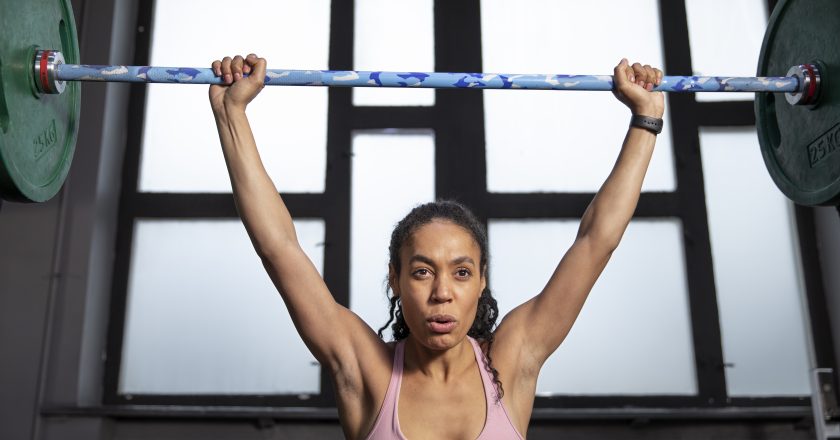
For decades, many women have been told that the ultimate fitness goal is to get smaller—smaller waist, slimmer arms, lighter weight on the scale. But health experts are increasingly challenging that idea. The real goal, they argue, should not be to shrink your body but to strengthen it. Muscle, it turns out, may be one of the most important investments women can make in their long-term health. As women age, biological changes begin to affect muscle growth and strength. Understanding these changes—and responding to them with the right nutrition and exercise—can make a powerful difference not just in how the body looks, but in how it functions for decades to come. Here are three key insights every woman should know about muscle, aging, and nutrition. 1. After 35, Muscle Growth Becom...
Smart Ways to Choose the Right Weight at the Gym
Muscle Building & Strength Training

Smart Ways to Choose the Right Weight at the Gym

Walk into almost any gym, and you’ll see it happen: someone grabs a pair of dumbbells, performs a few reps, pauses, and wonders whether the weight is too light or far too heavy. For many beginners—and even some experienced lifters—choosing the right weight can feel like a guessing game. But according to seasoned gym-goers with years of training experience, there’s a simple system that removes the uncertainty and helps you train smarter. Instead of randomly testing weights, the key is to follow a structured approach that allows your body to guide the process. Here are three practical lessons that can help anyone—from first-time gym users to regular lifters—figure out exactly how heavy they should be lifting. 1. Use the 8–12 Rep Rule as Your Guide If you don’t have a highly spec...
3 Ways Lifting Heavy Weights Can Make Your Brain Younger
Muscle Building & Strength Training

3 Ways Lifting Heavy Weights Can Make Your Brain Younger

Many people walk into the gym thinking about stronger arms, toned legs, or weight loss. But what if lifting heavy weights could also make your brain younger? New research suggests that strength training may do far more than sculpt muscles—it might actually slow the aging of the brain. A recently published randomized controlled trial in Jiro Science followed 309 healthy adults aged 62 to 70 to explore how resistance training affects brain aging. The findings were striking: people who consistently lifted heavy weights didn’t just get stronger. Their brains appeared biologically younger. Here are three key insights from the study that could change the way you think about strength training. 1. Heavy Lifting May Slow Brain Aging Researchers divided participants into three groups. On...
Strength Training vs Cardio: Which Is Better for Healthy Aging? New Insights Emerge
Personal Stories & Opinion

Strength Training vs Cardio: Which Is Better for Healthy Aging? New Insights Emerge

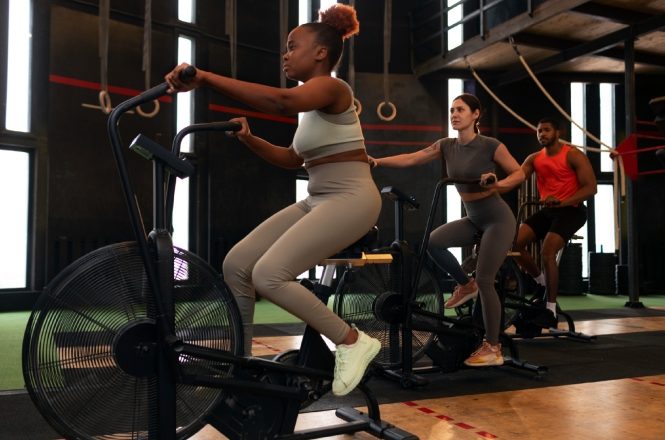
As the global population ages, a growing body of research is prompting fitness experts and public health authorities to re-evaluate the traditional emphasis on cardio exercise, suggesting that strength training may offer superior benefits for healthy aging and longevity. According to a detailed analysis published recently, both aerobic (cardio) and resistance (strength) training provide important health benefits, but they excel in different areas. The key to optimal healthy aging appears to lie in a balanced approach, with increasing evidence showing that strength training delivers unique advantages that cardio alone cannot match. Key Benefits of Each Modality Cardio (Aerobic Exercise) Improves cardiovascular health and endurance Helps regulate blood pressure and choles...
Early Morning Exercisers Gain the Most Health Benefits, New Study Finds
Muscle Building & Strength Training

Early Morning Exercisers Gain the Most Health Benefits, New Study Finds

People who exercise in the early morning hours may reap significantly greater health benefits than those who work out later in the day, according to a new study that adds fresh evidence to the ongoing debate about the best time to exercise. The research, published in the journal Obesity and reported by U.S. News & World Report on March 20, 2026, found that individuals who consistently exercised between 7 a.m. and 9 a.m. experienced superior improvements in cardiovascular health, weight management, blood pressure control, and overall metabolic function compared with those who exercised in the afternoon or evening. The study tracked thousands of adults over several years and controlled for total exercise volume, intensity, age, diet, and other lifestyle factors. Participants wh...
How Chronic Stress Can Sabotage Even the Strongest Exercise Goals
Weight Loss & Fat Burning

How Chronic Stress Can Sabotage Even the Strongest Exercise Goals

Chronic stress doesn’t just harm mental health — it can actively undermine the very exercise habits people rely on to cope with that stress, according to a growing body of evidence highlighted in recent reporting. A recent study reviewed multiple studies demonstrating how prolonged psychological stress disrupts motivation, energy availability, recovery, and even the physiological adaptations people expect from regular workouts. The result is a frustrating cycle: stress makes exercise feel harder, people exercise less consistently, and the resulting decline in fitness further amplifies stress sensitivity. Key mechanisms identified across the research include: Elevated cortisol interference — Persistently high cortisol levels blunt the normal post-exercise “feel-good” response ...
Mixing Exercise Types Linked to 19% Lower Mortality Risk in Landmark 30-Year Study
Muscle Building & Strength Training

Mixing Exercise Types Linked to 19% Lower Mortality Risk in Landmark 30-Year Study

Performing a wide variety of physical activities each week — rather than repeatedly doing the same single exercise — is associated with a significantly reduced risk of death over the long term, according to one of the largest and longest prospective studies ever conducted on exercise patterns and longevity. Published January 20, 2026 in BMJ Medicine, the research tracked the weekly exercise habits of more than 111,000 U.S. nurses and health professionals (aged 30–75 at baseline) for up to 30 years. Participants self-reported time spent on multiple activities including walking, jogging, running, cycling, swimming, rowing, tennis, squash, strength training, yoga, gardening, stair climbing, and more. Teenage Boys Doing Different Activities Collection illustration After adjusting for ...
How High-Intensity Group Exercises Turn Non-Morning People into Dedicated Early Risers
Muscle Building & Strength Training

How High-Intensity Group Exercises Turn Non-Morning People into Dedicated Early Risers

For many people, the idea of a 7 a.m. workout feels more like punishment than self-care. Yet a growing number of participants credit Orangetheory Fitness (OTF) with flipping that script, turning reluctant sleepers into enthusiastic morning exercisers through its signature blend of science-backed heart-rate training, variety, and group motivation. Orangetheory’s 60-minute “Orange 60” classes — the brand’s flagship format — split the hour evenly between treadmill intervals (cardio) and floor work (strength training using dumbbells, TRX straps, and rowing machines). Participants wear arm-based performance monitors that track heart rate in real time and display five color-coded zones: Gray (50-60% max HR) – warm-up/recovery Blue (61-70%) – moderate effort Green (71-83%) – challeng...
Mixing Up Your Workouts Could Be the Secret to a Longer Life, Major Study Finds
Weight Loss & Fat Burning

Mixing Up Your Workouts Could Be the Secret to a Longer Life, Major Study Finds

Doing a variety of different types of exercise each week – rather than sticking to just one activity – is linked to a significantly lower risk of early death, according to one of the largest and longest-running studies on physical activity ever conducted. Researchers from Harvard T.H. Chan School of Public Health tracked the weekly exercise habits of more than 110,000 U.S. adults (mostly nurses and health professionals) for up to 30 years. The findings, published in BMJ Medicine, revealed that people who regularly participated in the widest range of physical activities had a 19% lower overall risk of death during the study period compared with those who focused on only one type of exercise. The benefit of variety held true even after accounting for total exercise volume. In other wor...
The Post-Pump Fast: What Happens When You Skip the Post-Workout Meal?
Muscle Building & Strength Training

The Post-Pump Fast: What Happens When You Skip the Post-Workout Meal?

You’ve just finished a grueling session at the gym. Your muscles are screaming, your shirt is soaked, and you’ve left everything on the weight floor. Usually, this is the part where the "anabolic window" enthusiasts start shaking their protein bottles like maracas. But what happens if you choose to keep the kitchen closed? Fasting after intensive strength training is a polarizing topic. While it feels counterintuitive to starve a body you just pushed to the limit, the physiological shifts are fascinating. Here are four specific effects of delaying your meal after a heavy lift. 1. The Growth Hormone Surge When you lift heavy, your body naturally bumps up Human Growth Hormone (HGH) production. When you fast, that surge doesn't just stay; it skyrockets. Without insulin (which rises t...