Tag: all-cause mortality

The 2-Minute Air Squat Test: How Long You Can Hold a Squat Predicts How Long You’ll Live
Muscle Building & Strength Training

The 2-Minute Air Squat Test: How Long You Can Hold a Squat Predicts How Long You’ll Live

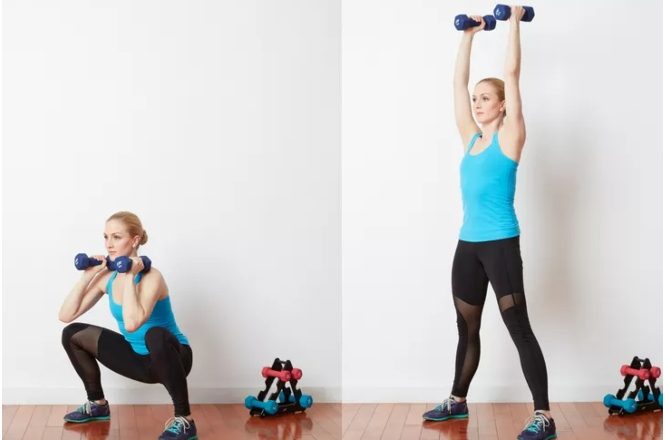
Forget the treadmill stress test. Forget the blood panel. One of the simplest and most accessible predictors of longevity may be hiding in an exercise most people learned in middle school gym class: the bodyweight squat. According to Dr. Peter Attia, a world expert in longevity and host of The Drive podcast, the ability to hold a 90-degree air squat for a specific duration is a powerful proxy for overall health, particularly lower body strength and muscular endurance. And the data supporting lower body strength as a mortality predictor is anything but trivial. In a recent discussion with Dr. Andrew Huberman of Stanford University, Attia explained that research studies commonly use leg extensions, wall sits, and squats to assess strength because they are easy to measure in experimenta...

Poor Cardiorespiratory Fitness Is as Deadly as End-Stage Kidney Disease, Data Show
Muscle Building & Strength Training

Poor Cardiorespiratory Fitness Is as Deadly as End-Stage Kidney Disease, Data Show

When people think of life-threatening medical conditions, end-stage kidney disease — requiring dialysis and a waiting list for an organ transplant — typically comes to mind as a grave prognosis. But new comparative risk data presented by Dr. Peter Attia, a guru in longevity medicine, reveal that being profoundly unfit carries a similar level of danger. Attia, speaking with neuroscientist and podcaster Dr. Andrew Huberman, laid out a series of hazard ratios for various conditions and behaviors, allowing a direct comparison: Condition / Risk FactorIncrease in All-Cause Mortality RiskEnd-stage kidney disease (on dialysis)175% (hazard ratio 2.75)Low strength (vs. high strength)250% (hazard ratio 3.5)Low muscle mass (vs. high muscle mass)200% (hazard ratio 3.0)Bottom 25% VO2 max (v...
Low Muscle Strength Triples Mortality Risk And It Matters More Than Muscle Size
Muscle Building & Strength Training

Low Muscle Strength Triples Mortality Risk And It Matters More Than Muscle Size

When most people think of building muscle, they imagine aesthetics — larger biceps, broader shoulders, or six-pack abs. But new insights from longevity expert Dr. Peter Attia suggest that the appearance of muscle matters far less than its performance. In a discussion with respected neuroscientist and podcaster, Dr. Andrew Huberman, Attia broke down the data on muscle mass versus muscle strength. Comparing low muscle mass individuals to those with high muscle mass reveals a 3x hazard ratio — a 200% increase in all-cause mortality risk for the weaker group. However, when researchers tease apart the data, strength emerges as the true hero. Low strength relative to high strength carries approximately a 3.5x hazard ratio, or a 250% greater risk of death. "It's probably less the mu...
VO2 Max Is the ‘Single Strongest’ Predictor of Longevity, Says Longevity Expert Dr. Peter Attia
Muscle Building & Strength Training

VO2 Max Is the ‘Single Strongest’ Predictor of Longevity, Says Longevity Expert Dr. Peter Attia

Fitness enthusiasts and biohackers often obsess over supplements, red light therapy, and cold plunges. But according to Dr. Peter Attia, host of The Drive podcast and a world expert in longevity science, none of those interventions comes close to the power of a single metric: VO2 max. VO2 max measures the maximum amount of oxygen your body can utilize during intense exercise. It is the maximum volume (V) of oxygen (O2) your body can consume, transport, and utilize per minute during intense exercise. It is a premier indicator of cardiovascular fitness, endurance capacity, and long-term health, often measured in milliliters of oxygen per kilogram of body weight per minute. In a recent conversation with Dr. Andrew Huberman of Stanford University, Attia revealed that cardiorespirator...