Tag: Nutrition

How Much Protein Do You Really Need to Lose Weight? Experts Break It Down
Nutrition & Meal Planning

How Much Protein Do You Really Need to Lose Weight? Experts Break It Down

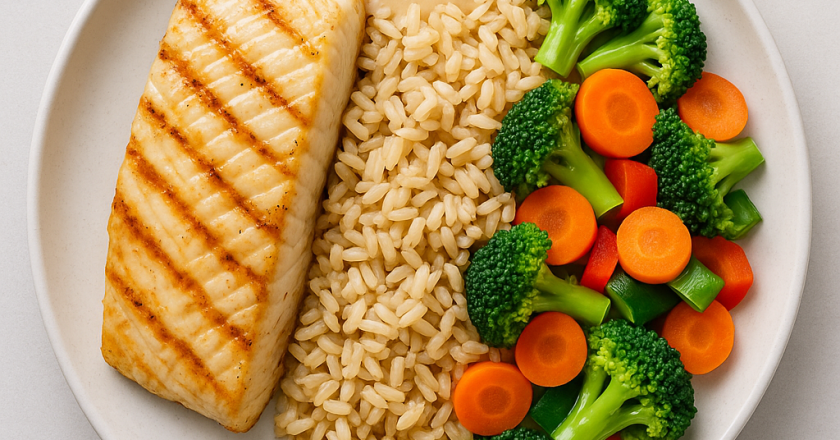
For anyone serious about sustainable weight loss, protein isn’t just another macronutrient—it’s a game-changer. A high-protein diet helps you stay fuller longer, burn more calories through digestion, preserve lean muscle, and reduce cravings, all of which support a consistent calorie deficit without feeling deprived. Recent research underscores why protein deserves center stage on your plate. Studies show that diets deriving 27–35% of daily calories from protein (roughly 1–1.6 grams per kilogram of body weight) promote greater fat loss while protecting muscle mass compared to lower-protein plans. For highly active individuals or those strength training, the International Society of Sports Nutrition suggests up to 3 g/kg can optimize fat loss and muscle retention. Calculating Your Per...
The Sunday Hour: How 60 Minutes of Prep Can Save You 10 Hours During the Week
Nutrition & Meal Planning

The Sunday Hour: How 60 Minutes of Prep Can Save You 10 Hours During the Week

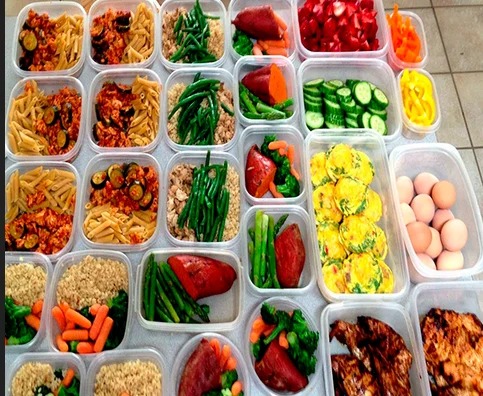
The internal scream that happens at 6:00 PM on a Tuesday—when the fridge is a graveyard of wilted cilantro and the "What’s for dinner?" text remains unanswered—is a universal modern tragedy. We’ve been told that eating well requires a marathon of chopping every Sunday afternoon, but the truth is far more efficient. You don't need a four-hour cooking session that leaves your kitchen looking like a disaster zone; you just need one focused, strategic hour to reclaim your entire week. The Myth of the "Meal Prep" Most people fail at meal prepping because they try to cook entire recipes in advance. By Wednesday, that pre-assembled chicken and broccoli tastes like cardboard and regret. Instead of "pre-cooking," shift your mindset to "pre-processing." Think of your kitchen like a high-end re...
The “Calories In, Calories Out” Debate: Why It’s Scientifically True and Practically Useless
Weight Loss & Fat Burning

The “Calories In, Calories Out” Debate: Why It’s Scientifically True and Practically Useless

In the world of fitness, the "Calories In, Calories Out" (CICO) model is the equivalent of gravity. It is a fundamental law of thermodynamics: if you consume more energy than you expend, you gain weight. If you consume less, you lose it. On paper, it is an airtight mathematical equation. In the messy, humid, emotional reality of a human life, however, relying solely on CICO is like trying to navigate the Atlantic Ocean with a bathtub toy. It is technically a vessel, but it won’t get you where you’re going. The Scientific Truth: The Law of Thermodynamics From a purely biological standpoint, the CICO model is unassailable. Every calorie you eat is a unit of energy. Your body uses this energy to keep your heart beating, your lungs inflating, and your muscles moving. Any excess is stored...
How to Feel Full While in a Calorie Deficit
Nutrition & Meal Planning

How to Feel Full While in a Calorie Deficit

Dieting usually means tiny portions. A scoop of rice. A sliver of chicken. You finish eating in five minutes and spend the next hour staring at the refrigerator, wondering if anyone will notice the cheese missing. This is the standard model. And it fails most people because hunger always wins. But what if the opposite worked? What if you ate more food, not less, and still lost weight? This is volume eating. The idea is simple. You swap calorie-dense foods for foods that fill your stomach without emptying your calorie budget. You stop fighting hunger and start using it. Why Your Stomach Falls for Volume Your stomach cares about space, not calories. When it stretches, it sends signals to the brain saying, "We are good, stop eating." A tiny cookie packs calories but takes up no ro...
Your Six-Pack Lives in the Kitchen, Not Only In the Gym
Nutrition & Meal Planning

Your Six-Pack Lives in the Kitchen, Not Only In the Gym

Here is a hard truth that gyms don't want you to hear: all those miles on the treadmill can be undone in about ninety seconds with a blueberry muffin. Exercise is important for your heart, your mood, and your strength. But when it comes to actually shedding fat, what happens in your kitchen matters far more than what happens in your gym. Think of it this way. You can dig a hole with a spoon if you try hard enough. But wouldn't you rather use a shovel? Nutrition is the shovel. Exercise is the spoon. If fat loss is the goal, you need the right tool for the job. Why Nutrition Calls the Shots You cannot trick biology. Your body follows simple rules of energy balance. But beyond just calories, nutrition determines whether that energy gets used or stored. Here is why what you put on you...