Tag: sedentary lifestyle

The Simple Exercise Habit Experts Say Could Support Long-Term Weight Loss
Weight Loss & Fat Burning

The Simple Exercise Habit Experts Say Could Support Long-Term Weight Loss

In a world dominated by desk jobs, traffic, and endless screen time, many people believe exercise requires hours in the gym to make a difference. But health experts say even 15 minutes of daily movement can significantly improve physical and mental well-being — and may be one of the most realistic ways to begin a lasting weight-loss journey. For people struggling to balance work, family responsibilities, and modern digital lifestyles, that message is becoming increasingly important. Exercise Is More Than Weight Loss While diet often gets most of the attention in conversations about losing weight, exercise remains a critical piece of long-term health. Cardiologists and fitness specialists say regular physical activity does far more than burn calories. Research has linked exercis...
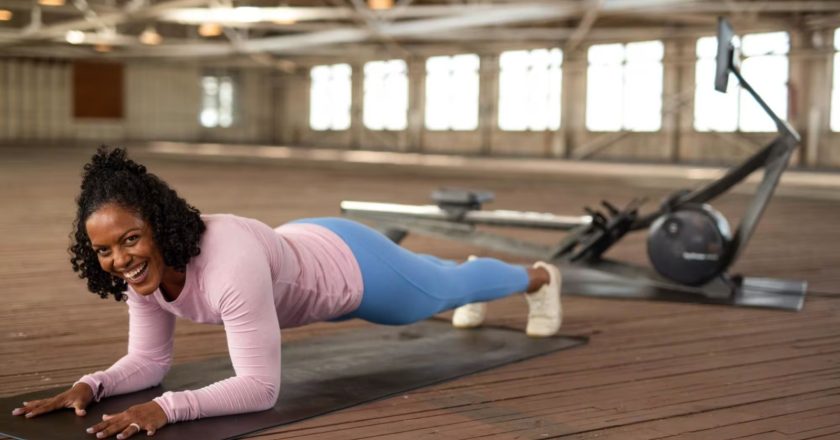
Why Your Core Matters More Than You Think And the Simple Test That Proves It
Personal Stories & Opinion

Why Your Core Matters More Than You Think And the Simple Test That Proves It

Try this: sit upright, shoulders back, chin slightly raised, feet flat, and your stomach gently pulled in. Hold that position while reading this. Within minutes, discomfort creeps in — your back tightens, your shoulders tire, and your posture begins to collapse. That strain is not just inconvenience; it is evidence of a widespread but often overlooked issue: weak core muscles. The Hidden Centre of Strength Contrary to popular belief, the “core” is not just about visible abs. It is a complex network of nearly 30 muscles spanning the abdomen, back, hips, pelvis, and even the buttocks. Together, these muscles stabilise the spine, support posture, and enable the body to transfer force efficiently between the upper and lower limbs. “When the core is strong, everything else works bet...
Reclaiming Your Health Through the Power of Motion
Weight Loss & Fat Burning

Reclaiming Your Health Through the Power of Motion

It is a silent catastrophe claiming 3.3 million lives every year—more than many of the natural disasters that dominate our breaking news cycles. According to the World Health Organization, physical inactivity has quietly ascended to become the fourth leading cause of death globally. While we obsess over the latest "superfoods" and expensive weight-loss pills, the most potent medicine available to us is entirely free, requires no prescription, and is sitting right under our noses: the simple act of motion. The Sedentary Trap of Modern Living In our rapidly urbanizing world, from the bustling streets of Accra to the tech hubs of Silicon Valley, our environments are increasingly designed to keep us still. We have mastered the art of the "sofa-to-seat" lifestyle. Drive-throughs at ba...
No More Back Pain: Simple Exercises to Build a Stronger, Healthier Back
Muscle Building & Strength Training

No More Back Pain: Simple Exercises to Build a Stronger, Healthier Back

Back pain is no longer just an occasional nuisance—it’s becoming one of the most widespread health challenges of modern life, affecting hundreds of millions of people worldwide. With more people spending long hours seated—whether at office desks in Accra or working remotely across the globe—strain on the back has become almost inevitable. Health data shows that low back pain affected an estimated 619 million people globally in 2020, with projections suggesting that number could rise significantly in the coming decades. But fitness experts say there is a practical, accessible solution: strengthening the muscles that support the spine. Why your back needs targeted training The back is a complex network of muscles working together to stabilise and move the body. Key muscle groups ...
The Science of Walking: How Many Daily Steps Do You Actually Need for Longevity?
Weight Loss & Fat Burning

The Science of Walking: How Many Daily Steps Do You Actually Need for Longevity?

The long-held golden rule of fitness, the 10,000-step daily goal, wasn't born in a lab, but in a 1965 Japanese marketing campaign to sell pedometers. Decades later, as modern science catches up with marketing, we are discovering that while 10,000 is a great target, the "sweet spot" for longevity and health might actually be closer than you think. For many office workers in Accra or digital nomads in New York, the pressure to hit five figures on a fitness tracker can feel like a secondary job. However, recent data suggests that the benefits of walking often plateau before that 10,000-mark, offering a sigh of relief for those struggling to find time between meetings and commutes. The Science of the Plateau Recent research, including a pivotal 2025 review, has shifted the conve...
The Overlooked Fitness Habit That Could Reduce Pain and Improve Mobility
Muscle Building & Strength Training

The Overlooked Fitness Habit That Could Reduce Pain and Improve Mobility

As children, many of us could sit cross-legged on the floor, twist, stretch, and jump back up without a second thought. Flexibility was effortless. But fast forward a few decades and the story often changes: stiff joints, tight muscles and that familiar struggle to stand up after sitting too long. Health experts say this gradual loss of mobility is one of the most overlooked issues in modern fitness—and it may be contributing to the aches and pains many adults experience today. While conversations about fitness often focus on weight loss, running, or strength training, flexibility is frequently ignored. Yet specialists say it is one of the key pillars of physical health, playing a major role in how comfortably people move through everyday life. According to guidelines from the Ame...
Sitting All Day? Why Standing Up Could Be the Best Thing for Your Circulation
Muscle Building & Strength Training, Weight Loss & Fat Burning

Sitting All Day? Why Standing Up Could Be the Best Thing for Your Circulation

For millions of office workers, the modern workday looks almost identical: hours seated at a desk, eyes fixed on a computer screen, and barely any movement between meetings and emails. By mid-afternoon, the fatigue sets in—not just mental exhaustion, but the heavy, sluggish feeling that comes from sitting still for too long. Health experts say that sensation is often linked to one overlooked issue: poor circulation. When the body remains inactive for extended periods, blood flow slows, and muscles become stiff. Over time, this can affect both physical and mental well-being. According to emerging research in psychoneuroimmunology (PNI)—a field that explores the relationship between the mind, nervous system and immune response—regular body movement plays a key role in maintaining both ...