
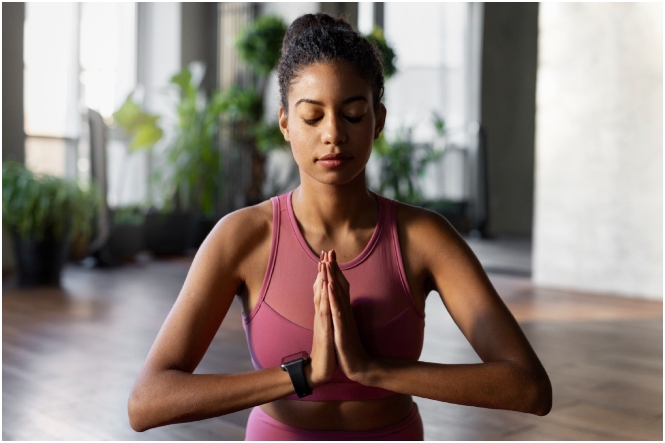
New study finds that a week of mind-body practice boosts natural painkillers, rewires neural connections, and even mimics psychedelic brain states
What if just one week of meditation could literally change your brain and your blood? Scientists at the University of California San Diego say it’s possible, and they have the scans and lab results to prove it.
A new study published in Communications Biology found that a seven-day program combining meditation, mind-body techniques, and group healing activities produced measurable changes in both brain activity and blood biology. Think of it as a mental tune-up with full-body results.
“We’ve known for years that practices like meditation can influence health, but what’s striking is that combining multiple mind-body practices into a single retreat produced changes across so many biological systems,” said senior study author Dr. Hemal H. Patel, a professor of anesthesiology at UC San Diego. “This isn’t about just stress relief or relaxation. This is about fundamentally changing how the brain engages with reality.”

What Happened Inside the 7-Day Retreat
Twenty healthy adults attended a weeklong residential retreat led by neuroscience educator Joe Dispenza. Over seven days, they completed about 33 hours of guided meditation, attended lectures, and took part in group healing activities.
Before and after the retreat, researchers scanned their brains using fMRI and analyzed their blood. The results were striking.
The Incredible Changes Scientists Found
After just one week, participants experienced:
- A quieter brain: Activity decreased in regions linked to internal mental chatter and self-focused thinking. Less noise, more clarity.
- Rewired brain cells: Blood plasma taken after the retreat actually encouraged lab-grown neurons to grow and form new connections. Your blood can literally help build better brain cells.
- Better fuel-burning: Cells showed improved ability to burn sugar for energy—a sign of metabolic flexibility.
- A natural painkiller boost: Levels of endogenous opioids—your body’s own pain-relieving chemicals—rose significantly.
- A balanced immune response: Both inflammatory and anti-inflammatory signals increased, suggesting an immune system that’s ready for action but not overreacting.
- Mystical experiences: Participants reported stronger feelings of unity, transcendence, and altered awareness. Those who felt the most mystical also showed the biggest brain changes.
Meditation vs. Psychedelics (No Drugs Required)
Here’s where it gets really interesting. The brain activity patterns seen after the retreat closely resembled those previously linked to psychedelic substances like psilocybin. The difference? No drugs were involved—just meditation.
“We’re seeing the same mystical experiences and neural connectivity patterns that typically require psilocybin, now achieved through meditation practice alone,” said Dr. Patel.
Why This Matters for Your Health
These findings help explain how non-drug approaches like meditation might support overall health. By boosting neuroplasticity (your brain’s ability to rewire itself), influencing immune activity, and increasing natural painkillers, meditation could help with emotional regulation, stress resilience, mental well-being, and even chronic pain management.
“This study shows that our minds and bodies are deeply interconnected—what we believe, how we focus our attention, and the practices we participate in can leave measurable fingerprints on our biology,” said first author Alex Jinich-Diamant, a doctoral student at UC San Diego.
The Bottom Line
You don’t need a fancy retreat to start. A few minutes of daily meditation might be your first step toward a rewired brain, a healthier metabolism, and a more resilient body. The science is clear: your mind isn’t just in your head. It’s in your blood, your cells, and your entire body.
So take a deep breath, close your eyes, and give it a try. Your brain will thank you in seven days.