
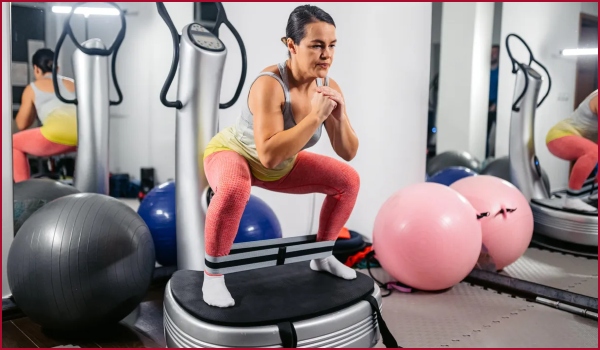
Vibration plates—those buzzing platforms you’ve seen in gyms or online—are gaining popularity as a low-impact way to boost workouts, aid recovery, and support overall fitness goals.
Originally invented in the late 1890s, these machines send rapid vibrations (usually 20–50 Hz) through your body, causing involuntary muscle contractions that can enhance strength, circulation, balance, and even bone density.
Here’s a clear, expert-backed guide on how to use a vibration plate safely and effectively, based on recommendations from fitness professionals and research.
What Is a Vibration Plate?
A vibration plate is a flat platform that oscillates at high frequency, causing your muscles to contract and relax dozens of times per second. You stand, sit, or perform exercises on it while holding handles for stability. Modern home models are compact, affordable, and increasingly common for warm-ups, strength training, recovery, or standalone sessions.
Key Benefits Backed by Research
- Muscle Activation & Strength: The rapid contractions mimic resistance training, potentially building strength faster than traditional exercise alone.
- Weight Loss Support: You burn extra calories through reflex muscle work; studies show modest reductions in fat mass.
- Improved Balance & Stability: Especially helpful for older adults or those in rehabilitation.
- Better Circulation: Vibrations promote blood flow without high impact.
- Reduced Bone Loss: Some research links whole-body vibration to improved bone mineral density in postmenopausal women.
- Faster Muscle Recovery: May decrease soreness and aid lymphatic drainage after workouts.
- Low-Impact Option: Ideal for people with joint issues or limited mobility.
How to Use a Vibration Plate Safely
- Set Up Properly
Place the plate on a flat, stable surface with enough room around it. Start with low intensity (20–30 Hz) and short sessions (5–10 minutes) if you’re new. - Basic Posture
Stand with feet shoulder-width apart, knees slightly bent, core engaged, and hold the handles if available. This “soft knee” stance absorbs vibrations safely. - Start Slow
Allow 30–60 seconds to adjust to the sensation. Begin standing still or doing gentle movements before adding exercises. - Recommended Beginner Exercises (10–15 minutes total)
- Squats: Stand, squat to 90 degrees, hold 5–10 seconds, rise. 3 sets of 10–15 reps.
- Calf Raises: Rise onto toes, hold 5–10 seconds, lower. 3 sets of 15 reps.
- Push-Ups (on plate): Hands on platform, perform push-ups for added instability. 3 sets of 8–12 reps.
- Plank: Forearms on plate, hold 20–40 seconds. 3 sets.
- When to Use It
- Warm-up: 3–5 minutes before strength training.
- During workout: Add vibrations to squats, lunges, or planks.
- Cool-down/recovery: 5–10 minutes of light standing or stretching.
- Safety Tips
- Limit sessions to 15 minutes, 2–3 times per week at first.
- Consult a doctor if pregnant, have recent surgery, heart conditions, epilepsy, or joint implants.
- Stop immediately if dizzy, nauseous, or in pain.
- Avoid locking knees or standing rigid—keep a slight bend.
Vibration plates aren’t a magic fix—they work best alongside regular exercise, good nutrition, and rest. But for boosting muscle activation, recovery, and low-impact strength, they’re a versatile addition to any routine.