
You know the feeling. It’s the middle of the afternoon. You just finished a meeting, and suddenly your brain feels like it’s filled with wet sand. Your eyelids are heavy, the keyboard looks blurry, and you’d trade your left arm for a fifteen-minute nap. We call it the 3 PM crash. We blame it on a bad night of sleep or the boringness of a spreadsheet. But nine times out of ten, the culprit is sitting at the bottom of your stomach. It’s the ghost of lunch past.
We have been trained to think of energy as a volume game. More coffee. More carbs. More fuel. But energy isn’t just about what you eat; it’s about how your body unpacks it. If you eat a lunch that is heavy on quick-burning fuel – like a giant sandwich on white bread or a bowl of pasta—your body breaks it down into sugar rapidly. You get a spike of alertness, followed by a biochemical comedown an hour or two later. That comedown is the crash.
To stop hitting the wall, you have to stop eating for the moment and start eating for the glide path. You need to build a plate that acts less like a firework and more like a slow-burning log on a campfire.
The Blueprint of the Anti-Crash Plate
The secret isn’t deprivation; it’s architecture. When you look down at your lunch, you want to see a trifecta of elements.
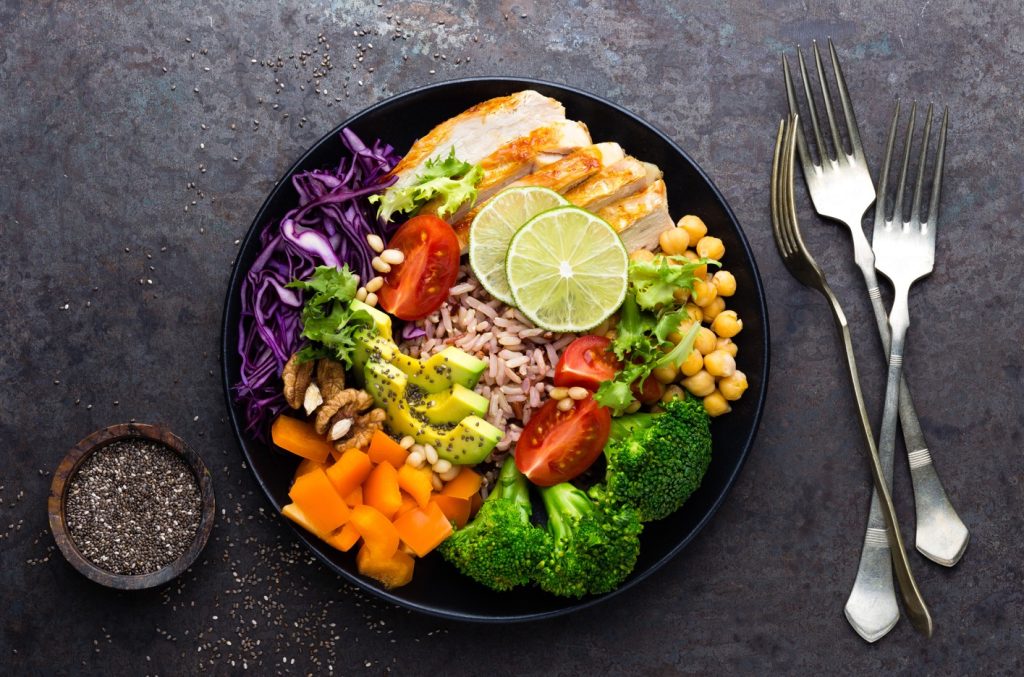
First, you need the anchor. This is protein. Chicken, fish, tofu, beans, or Greek yogurt. Protein takes the longest for your body to digest. It sits in your stomach like a slow-release time capsule, keeping hunger hormones at bay and providing a steady drip of amino acids to your brain. If your lunch is just vegetables and crackers, you’re missing the anchor. The boat floats away.
Second, you need the shield. This is fat and fiber: an avocado, a drizzle of olive oil, a handful of nuts, or seeds. Fat slows down the absorption of carbohydrates even further. It’s the bouncer at the door of your bloodstream, telling the sugar, “You can only come in a few at a time.” Fiber does the same thing. It keeps things moving, but slowly.
Third, you need the fuel. This is the smart carbohydrate. Skip the white rice and the flour tortilla. Go for the quinoa, the sweet potato with the skin on, the lentils, or the berries. These “complex” carbs come wrapped in their own fiber, meaning your body has to work to unlock the energy.
The Real-Life Test
Let’s compare two lunches. Lunch A is a turkey sandwich on white bread with a bag of chips and a soda. By 2:30 PM, the bread and soda have metabolized, your blood sugar is plummeting, and your brain is screaming for a rescue.
Lunch B is a salad with mixed greens, grilled chicken, a quarter of an avocado, some black beans, and a light vinaigrette. It’s not “less” food; it’s smarter architecture. The chicken (protein) and avocado (fat) hold the fort down while the beans and veggies (fiber/carbs) trickle energy into your system for hours.
When you balance your plate this way, you stop riding the roller coaster. You don’t need willpower to avoid the vending machine at 3 PM because your blood sugar never crashed in the first place. You feel steady. You feel clear. You realize that the crash wasn’t a requirement of being human; it was just a bad recipe.