

When it comes to exercise and longevity, variety may be just as important as volume. A new study from Harvard T.H. Chan School of Public Health has found that consistently engaging in a diverse range of physical activities—from walking and weightlifting to gardening and tennis—is associated with a significantly lower risk of premature death, even when the total amount of exercise remains the same.
The findings, published Tuesday in BMJ Medicine, add a novel dimension to the well-established link between physical activity and longevity. Researchers suggest that it may matter not only how much people move, but also how many different ways they move.
Variety Matters at Every Activity Level
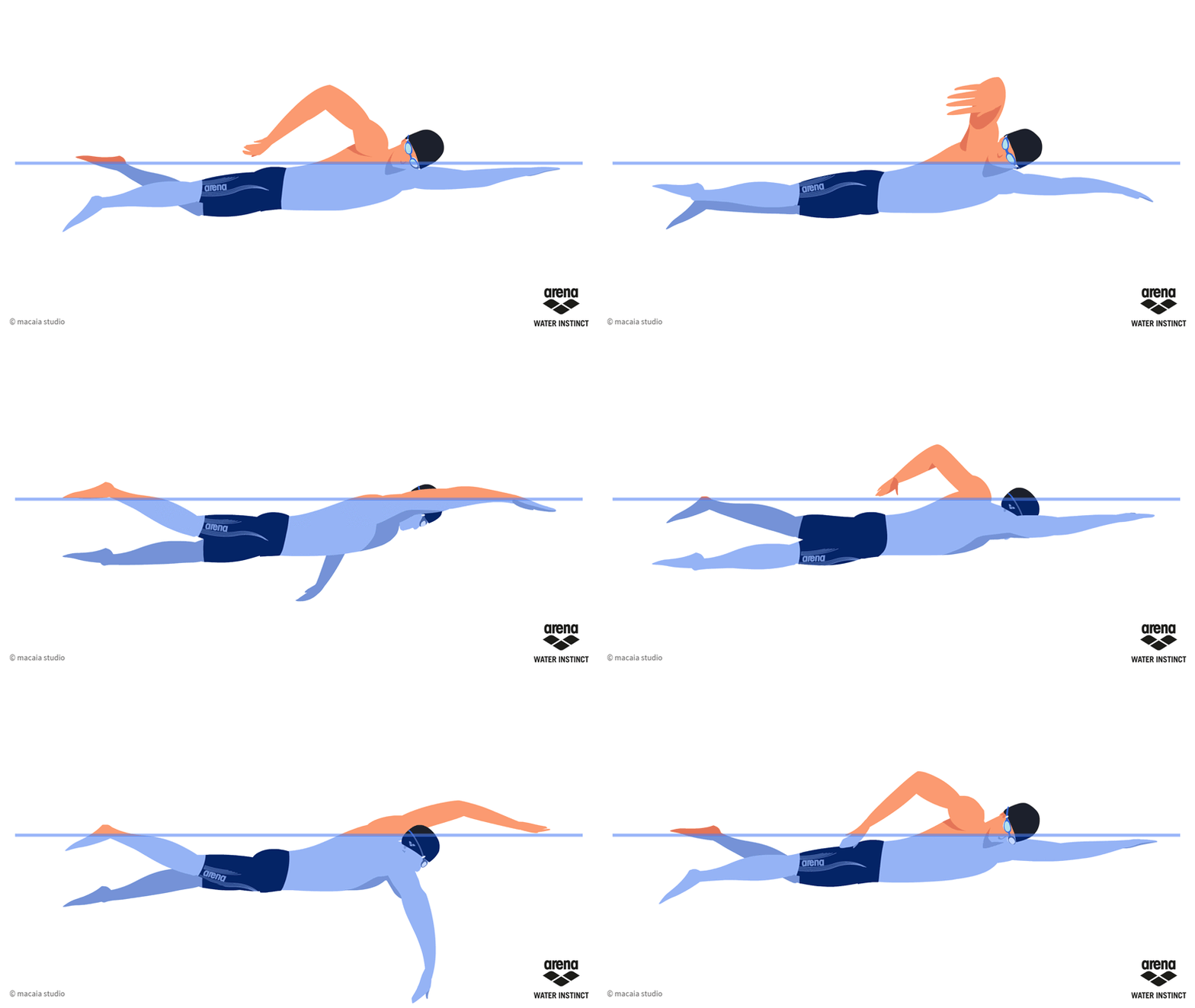
The study analyzed health and lifestyle data from more than 111,000 adult men and women over more than 30 years, drawn from the Nurses’ Health Study and the Health Professionals Follow-Up Study. Participants reported how much time per week they spent on a wide range of activities, including:
- Walking, jogging, and running
- Bicycling (including stationary)
- Lap swimming
- Rowing and calisthenics
- Tennis, squash, or racquetball
- Weightlifting and resistance exercises
- Lower-intensity activities such as yoga, stretching, and toning
- Moderate outdoor work like yardwork or gardening
- Heavy outdoor work such as digging or chopping
- Climbing stairs
The researchers scored participants based on both the variety and the total level of their physical activity. They then examined those scores in the context of participants’ health outcomes, adjusting for potential lifestyle and health factors.
The results were striking: participants who engaged in the highest variety of exercises had a 19% lower risk of premature death compared to those who engaged in the lowest variety. Importantly, this relationship held true at every level of physical activity. Whether someone exercised for 30 minutes a week or 300 minutes, greater variety was linked to greater longevity.
Why Variety May Matter

The study did not pinpoint the exact biological mechanisms behind the finding, but the researchers offered several possibilities. Different types of exercise place different demands on the body—cardiovascular endurance, muscular strength, flexibility, balance, and coordination. Engaging in multiple forms of activity may provide more comprehensive health benefits than relying on a single type alone.
For example, someone who only runs may develop strong cardiovascular fitness but neglect upper-body strength or bone density. A person who only lifts weights may build muscle but miss out on aerobic conditioning. A mix of activities may address a wider range of physiological systems, potentially reducing the risk of injury, overuse, and metabolic decline.
Actionable Advice for Everyday People
According to the researchers, the study provides a clear, actionable takeaway for individuals hoping to extend their longevity.
“People naturally choose different activities over time based on their preferences and health conditions,” said corresponding author Yang Hu, research scientist in the Department of Nutrition at Harvard Chan School. “When deciding how to exercise, keep in mind that there may be extra health benefits to engaging in multiple types of physical activity, rather than relying on a single type alone.”
The advice is especially relevant for older adults or those with chronic conditions who may need to modify their routines over time. Gardening, walking, yoga, and light resistance work all count toward variety—and, the study suggests, toward longevity.
Study Strengths and Limitations
The researchers noted that the size of the cohorts and the long follow-up period—more than three decades—make the study findings particularly robust. However, they also acknowledged limitations. The self-reported nature of exercise data carries a risk of errors, and the cohorts were composed primarily of white health professionals, which may limit the generalizability of the findings to more diverse populations.
The study’s first authors were Han Han and Jinbo Hu. Senior contributors included Edward Giovannucci, Meir J. Stampfer, Frank B. Hu, Qi Sun, and others.
For decades, public health guidelines have focused on how much exercise people need: 150 minutes of moderate activity per week, or 75 minutes of vigorous activity. This study suggests that what you do—and how many different things you do—may be just as important as how long you do them.
The takeaway? If your weekly routine consists solely of running, consider adding strength training. If you only lift weights, try a yoga class or a brisk walk. If you never venture beyond the treadmill, perhaps it’s time to pick up a tennis racket or a set of garden shears.
Variety, it turns out, may not just be the spice of life. It may be the key to a longer one.