Muscle Building & Strength Training

The Honeymoon is Over: Surviving the Day Your Muscles Stop “Accidentally” Growing
Muscle Building & Strength Training

The Honeymoon is Over: Surviving the Day Your Muscles Stop “Accidentally” Growing

There is a magical, fleeting window in every lifter’s life where you can practically look at a dumbbell and add an inch to your biceps. In that first year, your body is in a state of hyper-responsiveness; you can eat mediocre food, follow a haphazard program, and still wake up looking noticeably more muscular every Monday morning. But eventually, the biological "freebies" run out, the rapid gains taper off, and you hit the most dangerous fork in the road for any athlete: the end of the newbie gains. Managing your expectations during this transition is the difference between building a lifelong physique and quitting out of sheer frustration. Here is how to navigate the shift from "accidental" growth to "intentional" progress. 1. The Diminishing Returns Reality In your first twelve ...
The Conversation Between Your Brain and Biceps That Changes Everything
Muscle Building & Strength Training

The Conversation Between Your Brain and Biceps That Changes Everything

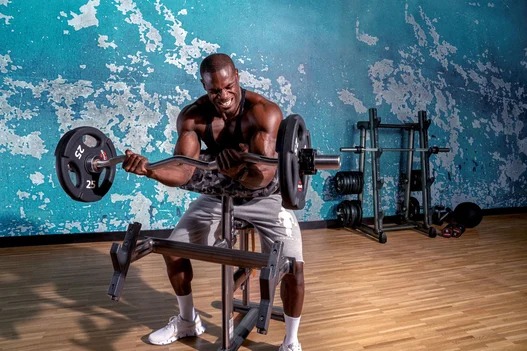
Watch two people do a bicep curl. One swings the weight up with momentum, face bored, elbow traveling, back arching. The other stands still, breathes, and somehow makes the same movement look like meditation with a purpose. Same weight. Same exercise. Completely different results. The difference isn't in the muscle. It's in the conversation happening between the ears. The mind-muscle connection sounds like yoga studio mysticism. It's actually hard neuroscience, and ignoring it leaves gains on the table. What "Connection" Actually Means Nerve signals travel from your brain to your muscles telling fibers to fire. That's how movement happens. But most people send a vague, sloppy signal—"move arm, lift weight"—and let momentum handle the rest. The mind-muscle connection is sending a s...
Muscle Building & Strength Training

The Strongest Thing You Can Do Is Sometimes Nothing at All

Walk into any gym and you'll see them—the ones who haven't missed a day in years, grinding through heavy squats with dark circles under their eyes, wondering why the weights stopped moving. They look strong. They feel tired. And they cannot figure out why the program that built them is now breaking them. The answer isn't more weight. It's less. Deliberately, strategically less. The art of the deload week is the secret handshake of lifters who stay strong long after the grinders have burned out. What Actually Happens When You Train Lifting breaks you down. That soreness the next day? Microscopic tears in muscle tissue. The fatigue that lingers? Your nervous system is waving a tiny white flag. Growth doesn't happen during the set. It happens during the recovery, when your body rebui...
10 Game-Changing Exercises to Tone, Strengthen, and Define Your Whole Body
Muscle Building & Strength Training

10 Game-Changing Exercises to Tone, Strengthen, and Define Your Whole Body

In the world of fitness, simplicity often wins when it comes to building a strong, toned physique that lasts. Daily movement is key to optimizing health, but the overwhelming array of options can leave anyone feeling stuck. That's why a focused set of foundational exercises can deliver powerful results without complexity. Here's a roundup of 10 exercises to tone every inch of your body—a mix of bodyweight staples and minimal-equipment moves that target multiple muscle groups for efficient, full-body toning. These compound and functional movements promote strength, balance, calorie burn, and long-term fitness. Incorporate them into a routine 3–4 times per week, and watch your body transform. LungesThese challenge balance while building leg and glute strength for everyday func...
Walking vs Running: Which Is Better for Your Health? Experts Break It Down
Muscle Building & Strength Training

Walking vs Running: Which Is Better for Your Health? Experts Break It Down

For anyone trying to decide between lacing up for a run or stepping out for a brisk walk, the answer isn’t as simple as “faster is better.” Both forms of movement deliver powerful health benefits, but they shine in different ways—especially when time, joints, and long-term sustainability come into play. A recent deep dive from fitness experts highlights the real differences: Running burns more calories per minute (280–520 calories vs 100–200 for brisk walking), drives faster aerobic adaptations, and boosts cardiovascular fitness more intensely. It’s also highly accessible—humans are literally built to run long distances—and can be more motivating when done outdoors or in groups. However, it carries higher injury risk (knees, shins, ankles, lower back) if recovery, form, or strength ...
The Best Core Exercises for All Fitness Levels: Build Strength, Stability & Confidence
Muscle Building & Strength Training

The Best Core Exercises for All Fitness Levels: Build Strength, Stability & Confidence

Your core isn’t just about six-pack abs—it’s the powerhouse that stabilizes your spine, supports every movement, and keeps you balanced in daily life. From pushing a cart to tying your shoes, your core (including abs, back, pelvic floor, glutes, and more) is constantly working. Strengthening it improves posture, reduces injury risk, enhances athletic performance, and even supports long-term health. Here’s a clear guide to effective core exercises for beginners, intermediates, and advanced fitness levels—no fancy equipment needed. Beginner Core Exercises Start here if you’re new to exercise or returning after a break. Focus on form and control. Bridge Lie on your back, knees bent, feet flat on the floor hip-width apart. Tighten your core and glutes, then lift yo...
The Edge of Exhaustion: Training to Failure vs. Leaving Reps in the Tank
Muscle Building & Strength Training

The Edge of Exhaustion: Training to Failure vs. Leaving Reps in the Tank

Muscles are built in the thin, vibrating space between "I think I can" and "I absolutely cannot." For decades, the iron-clad rule of the bodybuilding world was simple: if you didn’t collapse after your last set, you weren't trying hard enough. But as sports science has evolved, we’ve learned that the "no pain, no gain" mantra is a bit like redlining a car engine—do it long enough, and something is bound to smoke. The real art of transformation lies in knowing when to floor the gas pedal and when to coast. Decoding the Terms Before we dive into the strategy, we need to define the "tank." In lifting circles, we use metrics such as RPE (Rate of Perceived Exertion) and RIR (Reps in Reserve). Training to Failure: You perform a movement until your muscles physically cannot complete ano...
What Happens to Your Body When You Lift Weights Every Day?
Muscle Building & Strength Training

What Happens to Your Body When You Lift Weights Every Day?

For fitness enthusiasts who love the iron, lifting weights daily can feel addictive—and for good reason. Resistance training builds strength, reshapes your body, protects joints, boosts mood, and helps you age stronger. But is every day the optimal approach? Health experts and recent research say consistency is powerful, yet daily heavy lifting comes with both impressive benefits and real risks. The Upsides of Daily Weight Training Faster Muscle Growth & Strength GainsFrequent stimulation causes repeated muscle fibre breakdown and repair, accelerating hypertrophy (muscle growth) and strength. Studies show that training the same muscle group 3–6 times per week can produce superior gains compared to once or twice weekly—especially for beginners and intermediate lifters. Imp...
Muscle Building & Strength Training, Personal Stories & Opinion

How Busy People Are Actually Making Time for Exercise – Real Tips from Busy People

Finding time to exercise can feel impossible when work, family, meetings, and daily life compete for every minute. But editors at Healthline (health and fitness curators) —who juggle deadlines, kids, remote work, and everything in between—have figured out practical ways to fit movement in without overhauling their schedules. Here are the real-life strategies they shared for squeezing in physical activity, even on the busiest days: Become a Morning Person (When It Works)One editor starts at 6 a.m. because afternoons and evenings often get derailed by fatigue, social plans, or laziness. Another treats a 7:45–8:45 a.m. gym session or fitness class as non-negotiable—like eating or sleeping—and adds a 30-minute outdoor walk (or walking pad indoors) during lunch. Turn Work-from-Home Me...
A Comprehensive Guide: How to Use a Vibration Plate for Better Fitness Results
Muscle Building & Strength Training, Weight Loss & Fat Burning

A Comprehensive Guide: How to Use a Vibration Plate for Better Fitness Results

Vibration plates—those buzzing platforms you’ve seen in gyms or online—are gaining popularity as a low-impact way to boost workouts, aid recovery, and support overall fitness goals. Originally invented in the late 1890s, these machines send rapid vibrations (usually 20–50 Hz) through your body, causing involuntary muscle contractions that can enhance strength, circulation, balance, and even bone density. Here’s a clear, expert-backed guide on how to use a vibration plate safely and effectively, based on recommendations from fitness professionals and research. What Is a Vibration Plate? A vibration plate is a flat platform that oscillates at high frequency, causing your muscles to contract and relax dozens of times per second. You stand, sit, or perform exercises on it while ho...